Sony A7 V Review: Sony’s Return to the Top of the Hybrid Camera Market?

The Sony A7 V arrives with a difficult mission: replacing one of the most successful mirrorless cameras ever made. For four years, the Sony A7 IV was the default recommendation for countless photographers and filmmakers looking for a capable hybrid camera without stepping into flagship pricing.
But the market of 2026 is very different from the market of 2021. Today, Sony faces serious competition from cameras such as the Nikon Z6 III and Canon EOS R6 III, both of which have raised expectations for what a mid-range full-frame camera should deliver. The question is no longer whether Sony can produce a great camera. The question is whether the A7 V can reclaim the position its predecessor held for so long.
The A7 V is not merely a replacement for the A7 IV. It feels designed to reclaim Sony’s position at the centre of the hybrid camera market.
After spending time with the camera, I believe the answer is yes.
Familiar Design, Meaningful Improvements
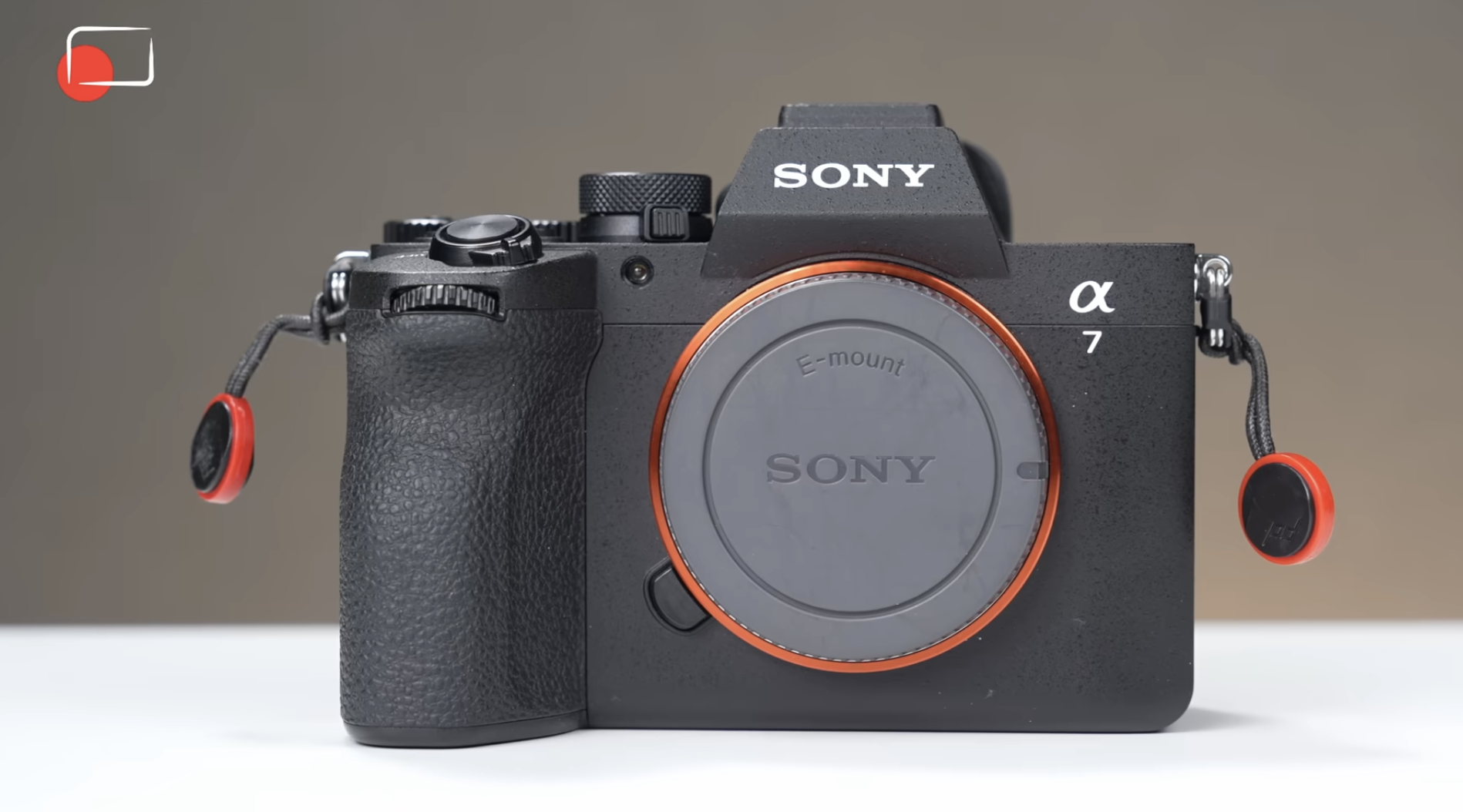
At first glance, the Sony A7 V looks remarkably similar to the A7 IV. The body shape remains largely unchanged, as do the controls, battery, viewfinder, and card slot configuration. However, Sony has introduced two notable improvements.
The first is the new display. The A7 V adopts the multi-angle screen design first seen in cameras such as the Alpha 1 II and A9 III. In my opinion, this remains the best screen implementation currently available on a hybrid camera. It combines the flexibility of a fully articulating screen with the convenience of a tilting mechanism, making it equally useful for photography, video production, low-angle shooting, and self-recording. Sony has also doubled the screen resolution compared to the A7 IV, making monitoring and reviewing footage noticeably more pleasant.
The second improvement is connectivity. Sony has finally removed the aging Micro USB port and replaced it with dual USB-C ports. The lower port supports Power Delivery and standard connectivity, while the upper port supports 10Gbps data transfer, fast file transfers, Power Delivery, and direct webcam functionality at up to 4K 30fps. These are small changes on paper, but meaningful improvements in daily professional use.
Refined User Experience
Sony’s menu system continues to evolve, and one of my favourite additions is the dedicated video menu section. This feature was absent from the A7 IV and significantly improves usability for hybrid shooters who frequently switch between still photography and video production. Combined with Sony’s extensive customization options, the camera can easily be tailored to individual workflows. The result is a camera that feels mature, efficient, and designed around real-world use rather than specification sheets.
A New Processor Architecture
One of the biggest upgrades inside the A7 V is the new BIONZ XR2 processor. Previous Sony cameras used the BIONZ XR architecture alongside separate AI processing hardware in some models. The new XR2 combines those capabilities into a single chip, improving both performance and efficiency. Sony claims approximately 25% longer battery life compared to the A7 IV despite using the same battery. In practical use, battery performance was indeed impressive, especially considering the additional processing power now available.
The Sensor: Same Resolution, Completely Different Performance
On paper, the sensor specification may look familiar. The A7 V uses a new 33-megapixel full-frame sensor, matching the resolution of the A7 IV. However, this is not the same sensor.
Sony has adopted a partially stacked sensor design, similar in concept to what Nikon introduced with the Z6 III. To simplify the explanation: traditional sensors are relatively slow to read data. Fully stacked sensors, like those found in cameras such as the Alpha 1 II, offer extremely fast readout speeds but are significantly more expensive. A partially stacked design sits between the two. It delivers much faster readout performance while keeping costs under control.
The benefits are immediately visible. The A7 IV was limited to 10 frames per second. The A7 V can now shoot at up to 30 frames per second with continuous autofocus, RAW capture, and no viewfinder blackout. That is a remarkable leap in performance and brings flagship-level speed to a much more accessible camera.
RAW Shooting and Buffer Performance
Sony offers three RAW recording options:
- Lossless Compressed
- Compressed
- Compressed HQ
At the time of testing, support for the new Compressed HQ format was still limited in some software applications, making direct comparison difficult. My recommendation remains Lossless Compressed. It offers excellent image quality while maintaining efficient buffer performance and manageable file sizes.
Perhaps more importantly, the A7 V can sustain 30fps shooting while maintaining full 14-bit RAW quality. Many competing cameras achieve high frame rates by introducing compromises in colour depth or image quality. Sony manages to avoid those compromises here, although naturally the buffer will fill more quickly when shooting extended bursts.
Pre-Capture Changes Everything for Action Photography
One feature that deserves special attention is Pre-Capture. When enabled, the camera continuously buffers images while the shutter button is half-pressed or AF-ON is engaged. Once the shutter is fully pressed, the camera can save images from up to one second before the capture occurred. The duration is customizable, as is the number of frames stored. For wildlife photography, sports, birds, or any fast-moving subject, this feature can mean the difference between getting the shot and missing it entirely.
Image Quality and Dynamic Range
Sony’s image quality remains excellent. Files are flexible, colours are pleasing, and the dynamic range is outstanding. Sony claims up to 16 stops of dynamic range, a figure I cannot independently verify. What I can say is that the files are highly resilient in post-production and provide substantial latitude when recovering highlights and shadows.
One concern surrounding the move to a partially stacked sensor was the potential impact on dynamic range. In practice, I found no meaningful degradation compared to the A7 IV. The speed gains are obvious. Any loss in image quality is not.
Video Performance Finally Catches Up
One of the biggest limitations of the A7 IV was its cropped 4K 60fps recording. The A7 V fixes that. The camera can now record full-frame 4K at 60fps without crop, and that footage is oversampled from 7K, producing excellent detail and image quality.
Sony also introduces a new setting called “4K Angle of View Priority.” When enabled, users retain the full-frame field of view at 4K 60fps, but High ISO Noise Reduction becomes unavailable at higher ISO values. If disabled, the camera applies a modest 16% crop while retaining internal noise reduction functionality. Personally, I prefer performing noise reduction during post-production, so I would almost always choose the full-frame option.
The camera can also record 4K at up to 120fps, although this mode introduces a 1.5x crop and does not use oversampling. For most users, 4K 60fps oversampled footage will represent the sweet spot.
Dual Native ISO
The A7 V features Dual Native ISO, with a base ISO of 800 and a second native level at ISO 8000. Personally, I tend to prefer a lower secondary native ISO value, but many filmmakers appreciate higher native ISO settings for low-light production. In practical shooting scenarios, noise performance is very good. Under normal conditions, noise simply is not a concern.
Video Dynamic Range Remains Excellent
Dynamic range in video is equally impressive. Despite the faster sensor design, I observed no meaningful reduction in usable dynamic range compared to the A7 IV. This is important because it demonstrates that Sony has managed to deliver significantly higher speed without sacrificing one of the A7 series’ strongest attributes.
Autofocus: Exactly What You Expect from Sony
Sony’s autofocus system continues to be among the best in the industry. The A7 V includes AI-powered subject recognition, advanced human tracking, animal detection, bird detection, vehicle recognition, and all the modern autofocus tools we have come to expect. Performance is fast, accurate, and dependable. Whether shooting stills or video, in bright conditions or low light, the autofocus system simply works. This is not an area where users will find surprises. Sony remains a benchmark.
Stabilization Takes a Significant Step Forward
According to my colleague Elias, who spent considerable time testing the camera’s stabilization system, the A7 V represents a major leap forward. The camera offers Standard, Active, and Dynamic Active stabilization modes. Dynamic Active, in particular, delivers exceptionally smooth handheld footage and performs noticeably better than previous Sony generations, including cameras higher in the lineup. For content creators and documentary shooters who frequently work handheld, this is a genuinely meaningful upgrade.
Thermal Performance: No Concerns Here
Thermal performance was excellent throughout testing. The camera recorded more than three hours of continuous 4K 25fps footage indoors without overheating. In fact, the body never became noticeably warm. At 4K 60fps oversampled, the camera recorded for approximately two hours continuously without any thermal issues. I was unable to test the camera under extreme summer conditions in Dubai, but based on my experience, overheating appears highly unlikely to become a practical concern for most users.
Additional Features Worth Mentioning
Sony has introduced the ability to capture still photographs while recording video, a feature previously seen on the FX2. The implementation is straightforward. Press the shutter button during recording, and once the recording ends, the camera extracts the selected frame as a still image.
Vertical shooting support has also been improved. Portrait-oriented files now display correctly in browsers and editing software, while the camera interface rotates to match vertical shooting orientation. For creators producing content for Instagram, TikTok, and YouTube Shorts, these small improvements add up.
What Is Missing?
My biggest disappointment is the absence of waveform monitoring and false colour. For a camera that has become increasingly video-focused, these professional exposure tools should be standard.
Some users will point to the lack of internal RAW recording or the absence of Open Gate recording. Personally, I do not consider either omission a deal breaker. The A7 V is not primarily aimed at filmmakers who build their entire workflow around RAW acquisition. Cameras like the Nikon ZR serve that audience better. Similarly, while Open Gate recording can be useful, I do not believe it should determine the purchasing decision for most hybrid shooters.
Final Verdict
The Sony A7 V succeeds because it improves almost everything that mattered about the A7 IV. The new partially stacked sensor delivers dramatically faster performance. The camera now offers blackout-free 30fps shooting, uncropped 4K 60fps recording, improved stabilization, longer battery life, better connectivity, and the same reliable Sony autofocus system professionals have trusted for years.
Competition has never been stronger. Nikon and Canon have both raised the bar significantly. Yet Sony’s response is convincing. The Sony A7 V is not merely a replacement for the A7 IV. It is a camera that feels designed to reclaim Sony’s position at the centre of the hybrid camera market. For photographers and filmmakers looking for one camera that can do almost everything exceptionally well, the Sony A7 V is one of the strongest options available today.
Where to buy
TECHMISSION Recommends
Where to Buy the Sony A7 V
Some links are affiliate links — TECHMISSION may earn a commission at no extra cost to you. See our affiliate disclosure.
Some links in this article are affiliate links. If you buy through them, TECHMISSION may earn a small commission at no extra cost to you — which helps us keep producing this content. Editorial opinions are independent of any commercial relationship.
بعض الروابط في هذه المقالة هي روابط شراكة. عند الشراء عبرها، قد يحصل TECHMISSION على عمولة بسيطة دون أي تكلفة إضافية عليك — وهذا يساعدنا على الاستمرار في إنتاج هذا المحتوى. آراؤنا التحريرية مستقلة عن أي علاقة تجارية.