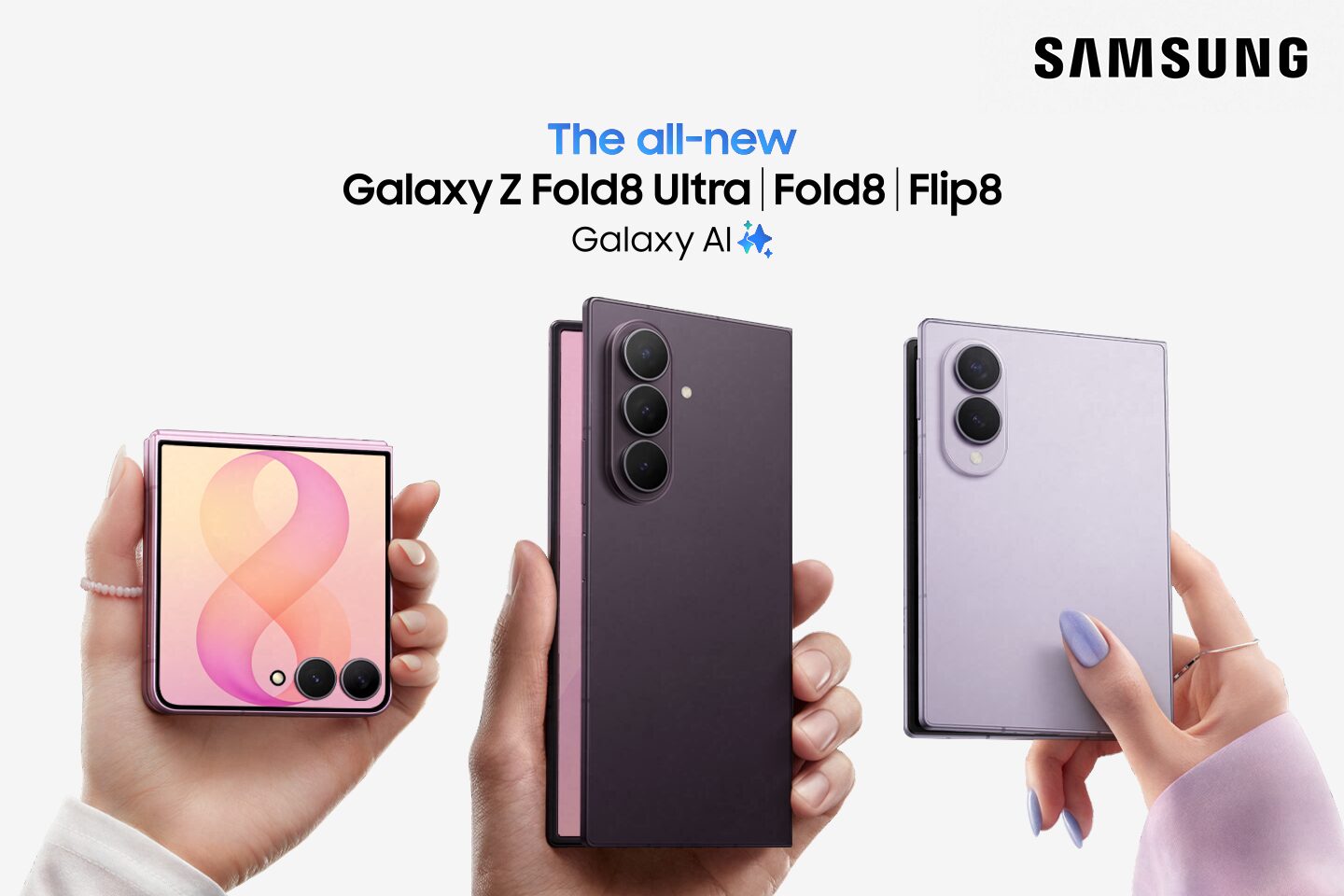
Samsung Galaxy Z Fold8 and Z Fold8 Ultra
Two very different ideas of what a foldable should be
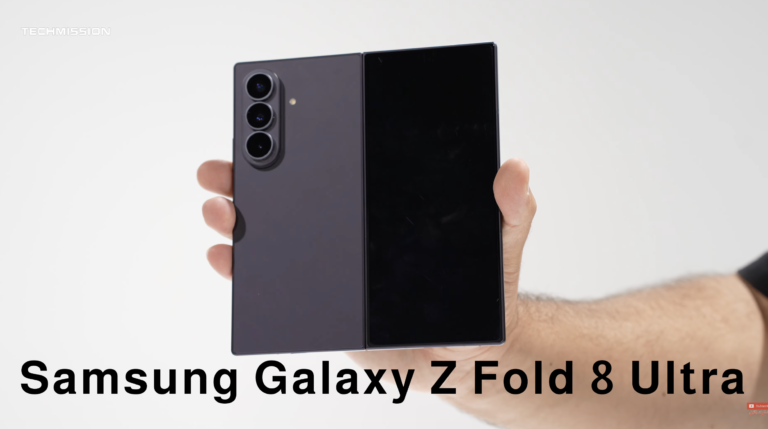
Samsung has split its book-style foldable into two branches: the 8-inch Galaxy Z Fold8 Ultra is the direct premium successor to the familiar Fold line, while the smaller, lighter Galaxy Z Fold8 adopts a new landscape-oriented shape for reading, games and video. Here are the confirmed specifications, the practical differences and the questions that only testing can answer.
Samsung has done more than refresh a hinge and processor this year. The Galaxy Z Fold8 Ultra and Galaxy Z Fold8 share the same flagship platform, software generation and core foldable engineering, but they are aimed at different people.
The Fold8 Ultra is the conventional productivity flagship: an 8-inch inner screen, a 6.5-inch cover screen, a 200 MP main camera, a telephoto lens, a 5,000 mAh battery and 45 W charging. The Fold8 is a smaller 201 g device with a much squarer 5.5-inch cover screen, a 7.6-inch 4:3 inner display, dual 50 MP rear cameras and a 4,800 mAh battery.
That distinction is the story. Samsung is no longer asking one Fold design to satisfy every buyer.
The short answer: which Fold8 is for you?
Choose the Galaxy Z Fold8 Ultra if your priorities are multitasking, the strongest camera system, longer battery potential and a cover screen that behaves like a normal flagship phone. It is also the better fit for creators who can use the 200 MP mode, 3x telephoto camera, 8K recording, APV codec and Cine LUT tools.
Choose the Galaxy Z Fold8 if portability and a more compact reading or media device matter more. It is 14 g lighter by Samsung’s headline figure, and its unusual dimensions make the opened screen wider in landscape use. The trade-offs are obvious: no telephoto camera, a smaller battery and a very short, wide outer display that may not suit conventional one-handed phone use.
Full specifications: Galaxy Z Fold8 Ultra vs Galaxy Z Fold8
| Specification | Galaxy Z Fold8 Ultra | Galaxy Z Fold8 |
|---|---|---|
| Software | Android 17; One UI 9 | Android 17; One UI 9 |
| Processor | Snapdragon 8 Elite Gen 5 for Galaxy | Snapdragon 8 Elite Gen 5 for Galaxy |
| Main display | 8.0" Dynamic AMOLED 2X; 2184 × 1968; 1–120 Hz; up to 3,000 nits | 7.6" Dynamic AMOLED 2X; 1848 × 2448; 403 ppi; 1–120 Hz; up to 3,000 nits |
| Cover display | 6.5" Dynamic AMOLED 2X; 2520 × 1080; 1–120 Hz | 5.5" Dynamic AMOLED 2X; 1248 × 1972; 428 ppi; 1–120 Hz |
| Folded dimensions | 158.4 × 72.8 × 8.9 mm | 123.9 × 81.9 × 9.7 mm |
| Unfolded dimensions | 158.4 × 143.2 × 4.1 mm | 123.9 × 161.4 × 4.5 mm |
| Weight | 215 g (global launch figure) | 201 g |
| Rear cameras | 200 MP wide, f/1.7, OIS; 50 MP ultra-wide, f/1.9, AF; 10 MP 3x telephoto, f/2.4 | 50 MP wide, f/1.8, OIS; 50 MP ultra-wide, f/1.9, AF |
| Selfie cameras | 10 MP cover + 10 MP inner | 10 MP cover + 10 MP inner |
| Memory / storage | 12 GB + 256/512 GB; 16 GB + 1 TB | 12 GB + 256/512 GB; 16 GB + 1 TB |
| Battery | 5,000 mAh typical (dual battery) | 4,800 mAh typical (dual battery) |
| Charging | 45 W wired; up to 67% in ~30 min; 20 W wireless; Wireless PowerShare | 45 W wired; up to 63% in ~30 min; 20 W wireless; Wireless PowerShare |
| Durability | IP48; Gorilla Glass Ceramic 3 front; Victus 2 rear; Armor Aluminum frame; Flex Titanium display structure | IP48; Flex Titanium display structure |
| Connectivity | 5G, LTE, Wi‑Fi 7, Bluetooth 6.0, USB‑C; dual SIM support varies by market | 5G, LTE, Wi‑Fi 7, Bluetooth 6.0, USB‑C; dual SIM support varies by market |
| S Pen / microSD | Neither supported | Neither supported |
| Colours | Graphite, Cream, Violet Shadow; Green Shadow online exclusive | Graphite, Cream, Lavender; Pistachio online exclusive |
A Fold family split in two
Samsung’s naming can initially confuse. The company explicitly says that the original Z Fold line now continues as the Galaxy Z Fold8 Ultra, while the standard Fold8 adopts a new shape and experience. In practical terms, Fold7 owners looking for the familiar tall outer screen and large tablet-like interior should compare their device with the Fold8 Ultra, not assume the smaller Fold8 is the direct replacement.
This also explains why the regular Fold8 looks so unusual on paper. Folded, it is only 123.9 mm tall but 81.9 mm wide. Opened, it becomes 161.4 mm wide and 123.9 mm tall. Samsung describes the cover as 10:16 and the inner panel as 4:3; the intent is to move naturally between social and short-form content on the outside, then reading, games and films inside.
The idea is credible, but the ergonomics need testing. A wide 81.9 mm folded body could be harder to grip than the 72.8 mm Fold8 Ultra, while the short cover screen may force more scrolling in conventional apps. On the other hand, the 201 g weight is exceptionally low for a book-style foldable and could make the device feel closer to a normal phone in a pocket.
Flex Titanium targets the crease—and durability still needs perspective
Both models use Samsung’s new Flex Titanium display structure, combining a titanium-alloy film with an enhanced titanium plate beneath the folding panel. Samsung says the system improves support, absorbs pressure and impact, and reduces crease visibility over time. Hinge mechanics, display tension and magnetic force have also been tuned to make opening smoother.
Those are useful engineering changes, but they are manufacturer claims until tested over repeated folding cycles. IP48 is another point readers should understand correctly: the “8” denotes strong water resistance under Samsung’s stated laboratory conditions, while the “4” provides protection only against solid objects larger than 1 mm. This is not a dust-proof phone, and Samsung does not recommend beach or pool use.
Neither phone supports the S Pen. That is a significant omission on devices positioned around productivity, especially the Fold8 Ultra. Buyers who depend on handwriting, annotation or precision editing should not assume that the large screen includes stylus support.
The displays are brighter, but shape matters more than size
Both inner screens reach a claimed peak of 3,000 nits, support adaptive 1–120 Hz refresh and use a low-reflection finish with Vision Booster. Those specifications should improve outdoor legibility, though peak brightness is not the same as sustained full-screen brightness.
The Ultra’s 8-inch canvas is the obvious multitasking choice, especially for side-by-side apps. The regular Fold8’s 7.6-inch display is smaller diagonally but its 4:3 shape may be particularly effective for e-books, web pages, retro games and rotated reading. Video will depend on aspect ratio: a squarer panel can create larger black bars with widescreen films, so the diagonal measurement alone does not tell you how large the actual picture will appear.
Camera hardware creates the clearest gap
The Fold8 Ultra carries the genuinely flagship system: a 200 MP f/1.7 main camera with optical stabilisation, a 50 MP autofocus ultra-wide that also handles macro work, and a 10 MP f/2.4 telephoto with 3x optical zoom. Samsung adds HDR capture in 200 MP mode, improved Nightography, 8K video through the APV codec and Cine LUT colour tools.
The regular Fold8 uses two 50 MP cameras. The main sensor has OIS and offers 2x “optical quality” crop zoom, while the autofocus ultra-wide provides the second perspective. It should be versatile for daily use, but it has no optical telephoto camera. That matters more than the headline megapixel count when shooting portraits, events or distant details.
Both models include 10 MP cameras on the cover and inner displays. Samsung also promotes Dual Recording and My FanCam on the Fold8, using the dual-screen form factor for live previews and automatic subject reframing. Their usefulness—and image quality from all five possible shooting positions—will need hands-on evaluation.
Performance, cooling and battery: same chip, different headroom
Both phones use Qualcomm’s Snapdragon 8 Elite Gen 5 for Galaxy and offer the same storage ladder: 12 GB of RAM with 256 GB or 512 GB, and 16 GB with 1 TB. There is no microSD expansion. Samsung promises up to seven generations of operating-system and security updates for the Ultra; regional product pages should be checked for the exact policy attached to each model.
The Fold8 Ultra has the advantage for sustained workloads. Its 5,000 mAh battery is paired with an expanded graphite cooling structure, while the regular Fold8 has 4,800 mAh. Both support 45 W wired charging and 20 W wireless charging, although the charger is sold separately. Samsung claims approximately 67% charge in 30 minutes for the Ultra and 63% for the Fold8 under controlled conditions.
Capacity alone cannot predict battery life. The Ultra drives a larger display but also has more thermal and battery headroom; the regular Fold8 has a smaller panel and a lighter body. Screen-on endurance, modem efficiency, standby drain and charging temperature are all priorities for testing.
Galaxy AI is becoming the operating layer
Android 17 and One UI 9 arrive with a stronger focus on agentic tasks. Now Brief surfaces personalised information, while Now Nudge can suggest actions when a plan emerges in conversation. Gemini Intelligence can work across more than 40 supported apps and services, and Gemini Notebook can turn mixed notes, files, recordings and images into summaries, reports and other formats.
Samsung also adds an AI Assistant Activity dashboard, intended to show automations performed on the user’s behalf, plus Privacy Alerts for potentially unnecessary background-permission access. Personal Data Engine, KEEP, Knox Vault and Knox Matrix form the security stack behind personalised and cross-device features.
The promise is compelling on a foldable because large screens make it easier to compare source material, keep a conversation beside an app and drag files between windows. The unanswered questions are availability, language support, subscription requirements and how reliably multi-app actions work outside Samsung’s demonstration scenarios.
Pricing, availability and launch context
Samsung opened pre-orders in selected markets on 22 July 2026. US pricing starts at $2,099.99 for the Galaxy Z Fold8 Ultra; Samsung lists 256 GB at $2,099.99, 512 GB at $2,299.99 and 1 TB at $2,699.99. Local pricing and launch offers vary, so TECHMISSION will add confirmed Middle East pricing separately rather than converting US prices and implying regional parity.
Eligible purchases include a six-month Google AI Pro trial with 5 TB of cloud storage in participating markets. The offer’s eligibility, renewal price and regional terms should be checked before purchase. Samsung also advertises improved Smart Switch migration from iOS and cross-platform Quick Share compatibility with AirDrop, but these workflows deserve practical verification.
What TECHMISSION will test
- Whether the Fold8’s short, wide cover screen is comfortable for typing, maps and everyday apps.
- Crease visibility, reflections and sustained brightness indoors and outdoors.
- Battery life across mixed cover-screen and inner-screen use.
- Thermal behaviour during gaming, 8K recording, editing and AI workloads.
- Camera consistency, telephoto value, low-light video and the practical benefit of 200 MP HDR.
- Hinge feel, one-handed opening, durability and dust exposure in normal use.
- Arabic-language support and regional availability for Galaxy AI and Gemini features.
Early verdict: the more ambitious Fold generation
On specifications alone, the Galaxy Z Fold8 Ultra is the complete flagship and the direct choice for existing Fold owners who want more screen, stronger cameras and better performance headroom. Its biggest weakness is equally clear: a productivity device this large still lacks S Pen support, and its premium pricing remains formidable.
The regular Galaxy Z Fold8 takes the bigger creative risk. It gives up the telephoto camera and some battery capacity, yet its 201 g body and 4:3 interior could make it the foldable that feels least like a compromise in a pocket. Whether the unusual outer screen is liberating or limiting will decide the product.