
REDCODE RAW Comes to Nikon: Living With R3D NE After Two Documentaries
RED colour science inside a Nikon body. Two documentaries. More than two terabytes of footage. This is the first RAW codec that made me stop thinking about the codec—and start thinking only about the story.
For most of my professional life, choosing a recording format was straightforward.
For quick-turnaround work, H.264 or H.265 made perfect sense. They were efficient, universally supported, and more than capable of producing excellent results when handled properly. RAW, on the other hand, always felt like a conscious commitment. You accepted larger files, more expensive media, longer grading sessions and a more demanding workflow because a particular project justified it.
RAW was never the default.
It was an event.
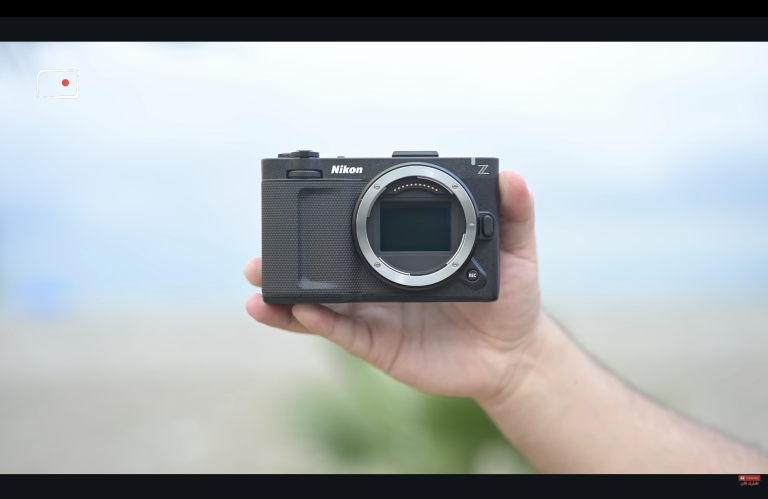
The Nikon ZR changed that equation—not because of the camera itself, although it is an excellent camera—but because of the codec recording inside it: R3D NE.
Over the past several months I have relied on this format to shoot two documentary productions, alongside extensive testing that has generated more than two terabytes of footage. Those projects included interviews, handheld documentary work, controlled lighting, natural light, exterior locations and some genuinely difficult indoor environments.
That matters because this article is not based on a weekend of testing or a collection of specification charts. It is based on trusting R3D NE when clients, deadlines and entire shooting days depended on it.
By the end of those productions, I realised something unusual had happened.
I had stopped thinking about the codec altogether.
Why My Opinion Matters
The internet already contains plenty of “first look” videos recorded after an afternoon with a pre-production camera.
This is not one of them.
My experience with R3D NE comes from real production environments where there are no second chances.
Across two documentaries I used the codec for interviews, moving subjects, low-light interiors, bright exteriors and long shooting days. I edited every project myself in DaVinci Resolve, graded every frame, built custom LUTs and archived every terabyte.
Those experiences revealed strengths—and limitations—that simply don’t appear in laboratory testing.
What Exactly Is R3D NE?
The simplest description is also the most important.
R3D NE is REDCODE RAW for Nikon cameras.
Following Nikon’s acquisition of RED, the two companies developed a version of REDCODE RAW designed around Nikon’s EXPEED image-processing architecture using intoPIX’s TicoRAW compression technology.
The result is not merely another RAW codec.
It is RED’s imaging philosophy running inside a Nikon camera.
The files record in 12-bit RAW while preserving RED’s colour pipeline—REDWideGamutRGB and Log3G10—which means they arrive inside your editing software already speaking RED’s language.
That distinction is more important than it sounds.
Most manufacturers can produce excellent sensors.
Far fewer have spent decades refining a colour pipeline trusted across Hollywood productions.
R3D NE brings that pipeline into a much more accessible camera system.
Why Nikon Buying RED Actually Matters
When Nikon acquired RED, many photographers saw it simply as a business story.
Filmmakers should see something else.
Colour science is incredibly difficult to build.
A recording format is relatively easy.
The real value lies in decades of colour research, highlight rendering, skin tone behaviour and post-production workflows that professionals already trust.
R3D NE is the first visible product of that partnership.
For the first time, a Nikon camera doesn’t merely record RAW.
It records REDCODE RAW.
That immediately changes where Nikon sits in the professional cinema conversation.
My Production Setup
The setup was intentionally simple.
- One Nikon ZR.
- Professional NIKKOR Z lenses.
- Fast CFexpress Type B cards.
- No external recorder.
- No cables.
- No cage built around another recording device.
Throughout both documentaries I primarily recorded in 4K at 25fps and 50fps.
Could I have shot everything in 6K?
Absolutely.
Did I need to?
No.
One of the first lessons R3D NE teaches is that shooting decisions should be driven by storytelling rather than specifications.
The additional storage requirements simply weren’t justified for these productions.
4K delivered all the resolution I needed while dramatically extending shooting time and reducing archive costs.
If I repeated those documentaries tomorrow, I would make exactly the same decision.
Coming From H.265
Before R3D NE, almost all of my work relied on H.264 and H.265.
I still believe both codecs remain the correct choice for many productions.
- Social media content.
- Corporate videos.
- News.
- Events.
- Fast-turnaround commercial work.
Those projects rarely benefit enough from RAW to justify the additional storage.
But documentaries are different.
When you’re following unpredictable moments, changing light and emotional performances, flexibility becomes insurance.
RAW doesn’t simply preserve image quality.
It postpones creative decisions until post-production.
That distinction completely changes the grading experience.
The Workflow Surprise
This was the biggest surprise of the entire experience.
I expected RAW to slow me down.
Instead, it simplified my work.
DaVinci Resolve recognised every clip immediately.
There were no transcoding stages.
No complicated imports.
No proprietary conversion software.
The files behaved exactly like professional RAW footage should.
Playback remained responsive on my editing workstation, grading felt natural and building a final LUT from my preferred look was straightforward.
Ironically, I spent less time fighting the footage than I often do with highly compressed H.265 material.
Why R3D NE Feels Different
Technically, several RAW formats preserve remarkable amounts of information.
The difference is not simply bit depth.
It is what happens after recording.
REDCODE RAW has spent years evolving inside high-end cinema production.
The workflow is mature.
The colour pipeline is mature.
The software support is mature.
That maturity becomes obvious after only a few grading sessions.
The footage responds predictably.
Corrections remain stable.
Nothing feels fragile.
Instead of constantly wondering how far you can push an image, you simply work.
Image Quality
Three characteristics stood out immediately.
The first was dynamic range.
Even when I wasn’t deliberately exposing to protect highlights, I consistently found enough latitude to recover difficult scenes naturally.
The second was highlight roll-off.
Bright areas don’t clip abruptly.
They fade away with a smoothness that feels remarkably filmic.
Finally, there were skin tones.
Having spent years grading Sony, Nikon and Canon footage, I can confidently say this is where RED’s colour science earns its reputation.
Compared to Sony’s S-Log3 and Nikon’s own N-RAW, I found myself spending noticeably less time correcting colour before building the creative grade.
The image simply arrived closer to where I wanted it.
The Sur Shipyard Test
One sequence changed my opinion of the codec entirely.
We were filming inside the traditional shipbuilding workshops of Sur, Oman.
Outside, the midday sun was unforgiving.
Inside, light levels collapsed.
I deliberately exposed for the available light, knowing I would eventually need to lift the shadows further than I normally would.
Back in Resolve I expected visible penalties.
Instead, the image remained remarkably clean.
Resolve’s own built-in noise reduction handled the remaining noise effortlessly.
In fact, after completing the grade I added film grain back into the image—not because I needed to hide imperfections, but because I wanted more texture.
That single experience taught me more about R3D NE than any laboratory chart ever could.
What I Didn’t See
Across more than two terabytes of production footage I never encountered compression artefacts that concerned me.
Rolling shutter remained well controlled.
Moiré never became a practical issue.
The codec simply disappeared into the background.
That may sound like faint praise.
It isn’t.
Professional tools should disappear.
Workflow Reality
None of this means RAW becomes free.
Storage still costs money.
Backups still take longer.
Rendering remains heavier than compressed codecs.
Resolve Studio is effectively mandatory if you want the best experience.
If your editing computer already struggles with H.265, moving into RAW won’t magically solve that problem.
R3D NE reduces the compromises of RAW.
It does not eliminate them.
R3D NE vs N-RAW
Having spent significant time with both formats, I don’t see them as direct competitors.
N-RAW remains an excellent codec.
Its smaller file sizes make it attractive for many productions, and Nikon deserves enormous credit for developing it.
R3D NE, however, feels like the more mature ecosystem.
The colour science is more established.
The grading behaviour feels more predictable.
The workflow integrates naturally into professional cinema pipelines.
If maximum efficiency is the priority, I would still recommend N-RAW.
If image quality and grading flexibility come first, I would choose R3D NE every time.
Who Should Shoot R3D NE?
Shoot it if you regularly grade your footage, produce documentaries, commercials or narrative work, value skin tone accuracy, or simply want RED’s colour science without investing in a RED cinema camera.
Stay with H.265 if your projects have rapid turnaround times, minimal grading, tight storage budgets or hardware that already struggles with high-bitrate media.
RAW is not automatically better.
It simply solves different problems.
TECHMISSION Recommends
Where to Buy the Nikon ZR
Some links are affiliate links — TECHMISSION may earn a commission at no extra cost to you. See our affiliate disclosure.
Final Verdict
Every camera manufacturer promises better image quality.
Very few fundamentally change the way you approach production.
R3D NE did exactly that.
Before these documentaries, choosing RAW was always a negotiation.
Would the project justify the storage?
Would grading justify the additional effort?
Would today’s shoot benefit enough to make it worthwhile?
After two documentaries, those questions disappeared.
I no longer decide whether to shoot RAW.
I simply decide whether the project deserves anything less.
For filmmakers who grade their own work and care deeply about colour, highlight behaviour and long-term creative flexibility, R3D NE on the Nikon ZR is one of the most compelling reasons I have seen in years to rethink what a hybrid camera can be.
From this project
The LUTs I graded this footage with
Everything above came out of grading R3D NE in Resolve — and the LUTs came out of it too. Shipyard is the look from The Shipmaker: warmer midtones, muted colour, deeper shadows, one node from Log3G10 to Rec.709. It ships with the two neutral conversions underneath it, one of which holds highlights to +8.5 stops over middle grey instead of clipping at +3.
TECHMISSION Recommends
Where to Buy the Nikon ZR R3D NE LUTs pack by TECHMISSION
Some links are affiliate links — TECHMISSION may earn a commission at no extra cost to you. See our affiliate disclosure.
The grade on these shipyard frames is the one I later packaged as the Nikon ZR LUT pack — same look, same camera, same light.