DJI Avata 360 Review: The Drone That Lets You Worry About Flying Later

Video available in Arabic only
Watch the video review on YouTube
The accompanying video review for this article is available in Arabic only.
For years, drone technology has moved in a predictable direction. Better cameras, longer flight times, stronger obstacle avoidance, and smarter automation.
Yet one challenge has remained surprisingly constant: getting the shot still depends on flying well.
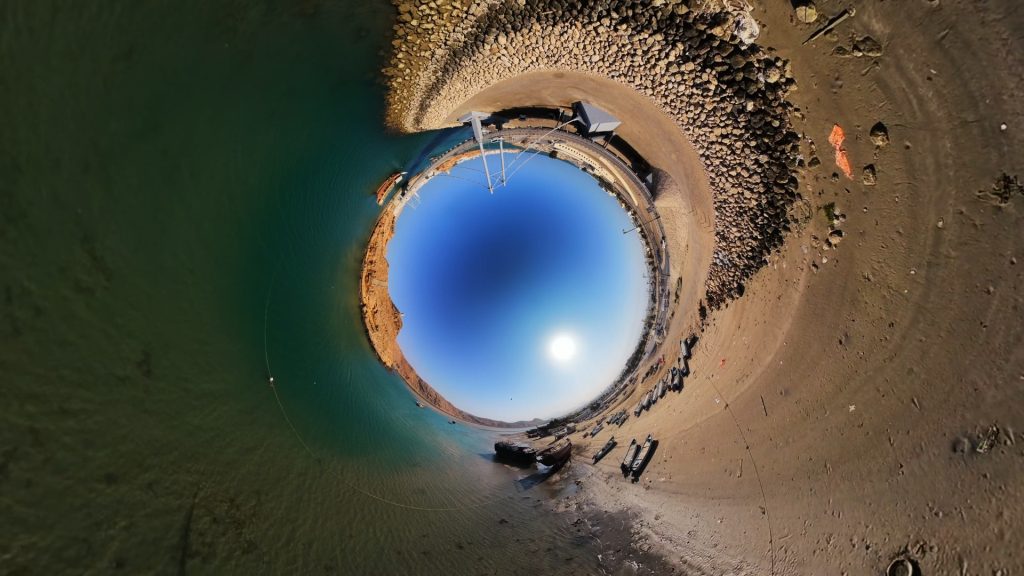
The new DJI Avata 360 approaches that problem from an entirely different angle. Instead of worrying about where the camera is pointing while you’re flying, the Avata 360 records everything around it in 360 degrees. You simply focus on the flight, and then decide later where you want the camera to look.
You fly first and direct afterwards. That single concept has the potential to change drone filmmaking entirely.
DJI Finally Enters the 360-Degree World
The Avata 360 marks DJI’s first serious entry into the world of integrated 360-degree drone cameras. What DJI has done here is combine its proven flight systems, obstacle avoidance technology, tracking features, and transmission reliability with a fully immersive 360-degree imaging system.
The result is a drone that feels fundamentally different from traditional camera drones. Instead of constantly thinking about framing, camera movement, and gimbal direction, you can focus entirely on the flight path and movement of the aircraft itself. The creative decisions happen later.
A Completely New Design
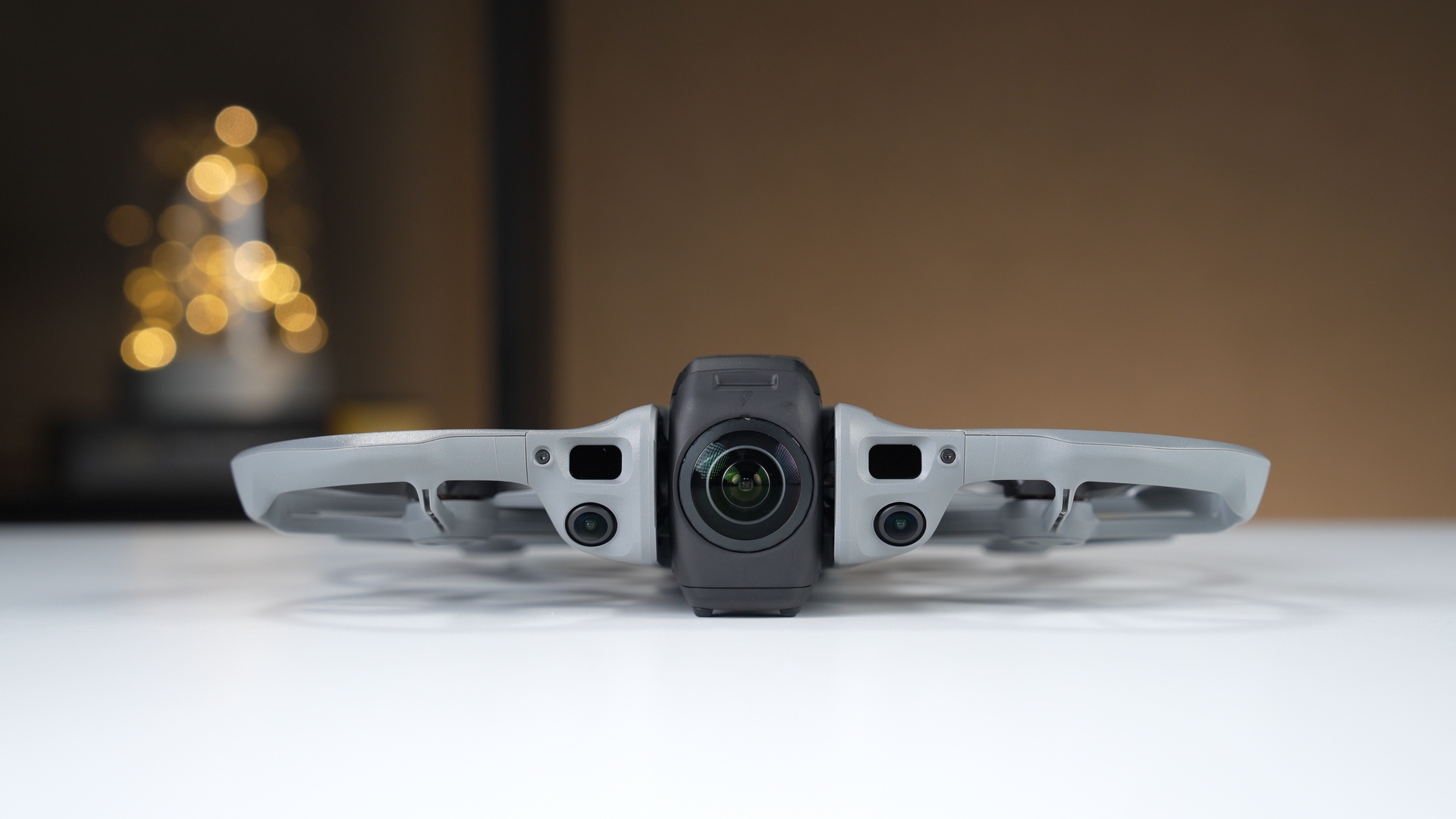
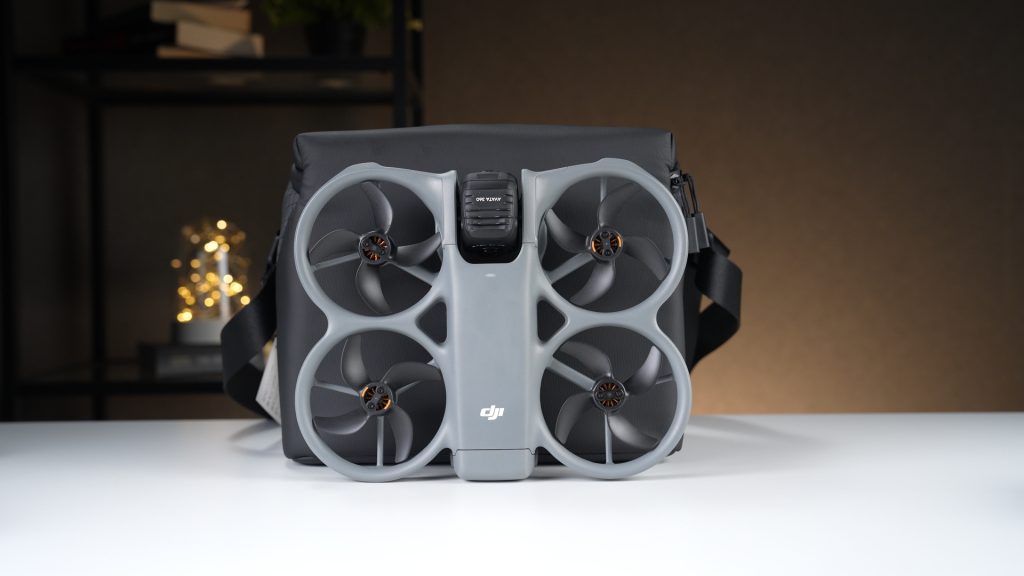
One glance at the Avata 360 and it’s immediately clear that this is not simply an Avata 2 with a different camera. The body is slimmer and more elongated, while the propellers sit inside protective ducts designed to withstand close-proximity flying.
That design choice makes perfect sense. A 360-degree drone naturally encourages pilots to fly closer to people, structures, and objects because the camera captures every direction simultaneously. The additional protection helps make that type of flying more practical and less intimidating.
The biggest visual difference, however, is the absence of a traditional gimbal. Instead, the drone features a rotating camera assembly containing two lenses positioned on opposite sides. Together, they capture the full spherical image, which is then stitched into a complete 360-degree recording. DJI has even designed the assembly to rotate into a protected position during take-off and landing to help safeguard the lenses.
A Small Feature That Makes a Big Difference
One design detail deserves special praise: the lenses are replaceable. Anyone who has used a 360-degree camera knows that the protruding lenses are often the most vulnerable part of the entire system. A scratch or impact can become an expensive problem. By allowing users to replace damaged lenses, DJI has addressed one of the most common concerns associated with 360-degree imaging systems. It is a practical feature, but one that could save owners significant frustration over the life of the drone.
The Easiest Way to Fly
By default, the Avata 360 ships with the familiar DJI RC 2 controller. That matters because it makes the aircraft immediately accessible to traditional DJI users. You are not forced into the FPV ecosystem from day one. Instead, you get the same dual-stick flying experience found across DJI’s mainstream drone lineup, combined with the company’s highly reliable transmission technology and intuitive controls.
For FPV enthusiasts, however, the drone is also compatible with DJI Goggles N3 and the Motion Controller 3, transforming it into a fully immersive FPV platform. And that creates something genuinely unique: an FPV drone equipped with a 360-degree camera.
DJI’s Most Advanced Safety Package Yet
As expected from DJI, obstacle avoidance is a major part of the package. The Avata 360 incorporates sensors in all directions, allowing it to detect and avoid obstacles regardless of where the drone is travelling. This becomes especially important when flying a 360-degree platform, where pilots may not be concentrating on a single forward-facing view.
The drone also incorporates forward-facing LiDAR technology. LiDAR has gradually become one of DJI’s most valuable safety features, particularly in low-light conditions. It improves obstacle detection, enables more reliable navigation, and assists with Return-to-Home operations even when GPS conditions are less than ideal.
Perhaps most impressively, obstacle avoidance remains active even in Sport Mode. That may sound like a small detail, but it represents a significant step forward for pilots who want both speed and safety.
The Real Magic Happens After You Land
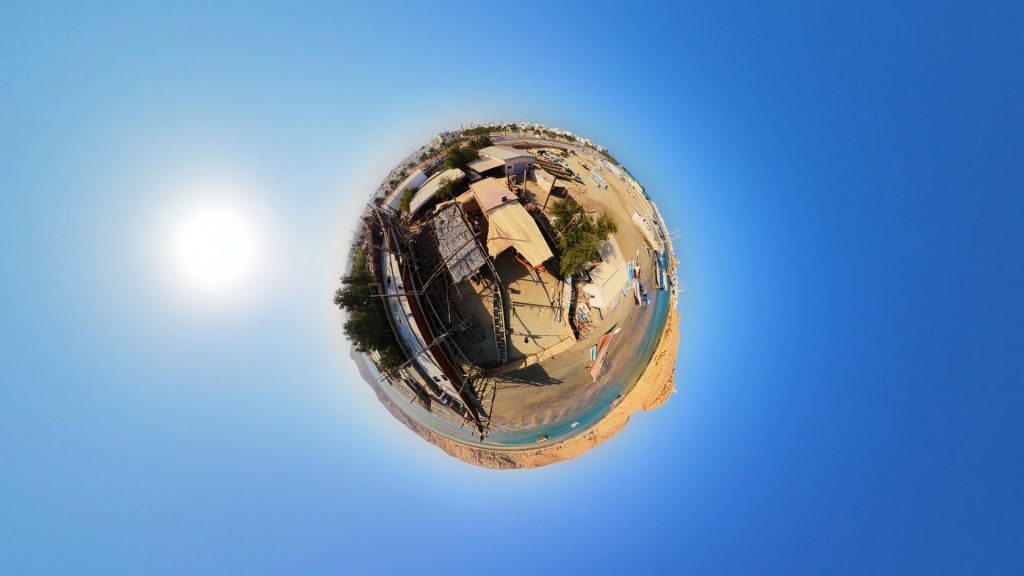
The most important feature of the Avata 360 isn’t found in the aircraft itself. It’s found in the editing process. Because every flight is captured in full 360 degrees, you are free to completely redefine the camera angle after recording.
- You can look forward, backward, upward, or downward.
- You can create dramatic camera movements that would be nearly impossible with a traditional drone.
- You can transform a single flight into multiple unique shots.
- You can effectively operate a virtual camera that can point anywhere at any time.
Editing can be performed through DJI Fly on mobile devices or DJI Studio on desktop systems, either using automated tools or manually through keyframes. For content creators, this dramatically expands creative possibilities.
What About Image Quality?
The Avata 360 uses two imaging sensors, one behind each lens. Each sensor is a 1-inch sensor, a format that has already proven itself across several high-end DJI products. Together, they record 8K 360-degree video at up to 60 frames per second.
This introduces an important concept that often confuses newcomers to 360-degree production. The original recording is 8K because it contains the entire spherical image. When you later choose a viewing angle and export a standard video, you’re effectively cropping a portion of that larger image. As a result, traditional exports are typically delivered at resolutions up to 4K.
For those who prefer conventional shooting, the drone can also operate using a single camera perspective, recording standard 4K video at up to 60fps.
My Initial Impressions
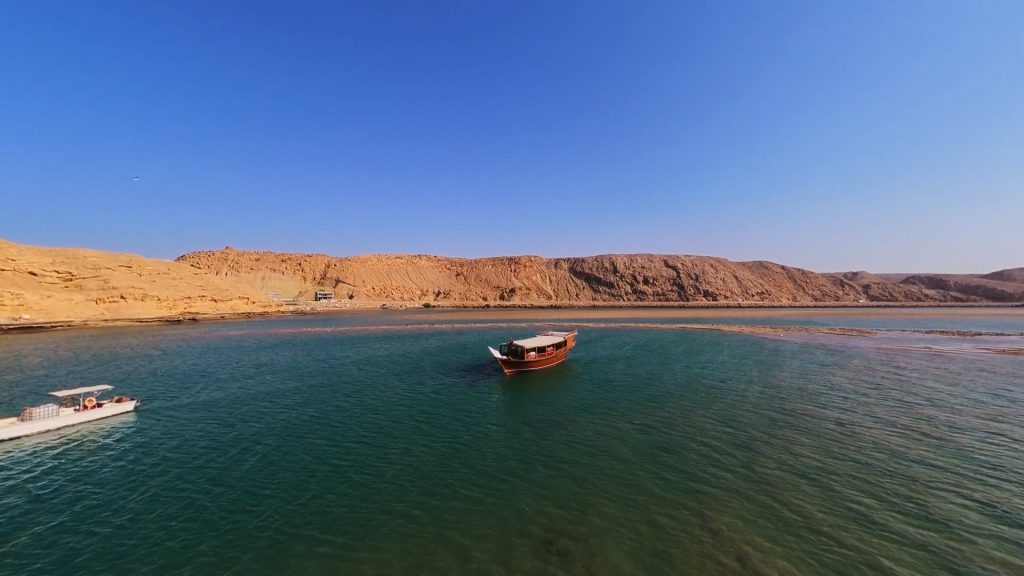
I have to be honest: my testing period did not go exactly as planned. I took the drone to Oman hoping to capture extensive footage around Sur, but strong winds limited flying opportunities. Shortly afterwards, regional events disrupted the remainder of my planned shooting schedule.
As a result, I consider this more of a first-look review than a definitive verdict. Even so, what I have seen so far leaves me extremely optimistic about the platform. The combination of DJI’s flight technology and 360-degree capture feels genuinely transformative rather than simply incremental.
Final Verdict
The DJI Avata 360 is not merely another addition to the Avata lineup. It represents a different way of thinking about aerial filmmaking. Instead of treating flying and filming as the same task, DJI separates them. You focus on the flight. The camera records everything. The creative choices come afterwards.
Add in dual 1-inch sensors, 8K 360-degree recording, comprehensive obstacle avoidance, FPV compatibility, and DJI’s mature flight ecosystem, and you have one of the most intriguing drones the company has released in years.
Is it the future of drone filmmaking? It’s too early to say. But it is certainly one of the boldest steps DJI has taken in a very long time.
Where to buy
TECHMISSION Recommends
Where to Buy the DJI Avata 360
Some links are affiliate links — TECHMISSION may earn a commission at no extra cost to you. See our affiliate disclosure.
Some links in this section may earn us a small commission at no extra cost to you. Editorial opinions are independent of any commercial relationship.
Some links in this article are affiliate links. If you buy through them, TECHMISSION may earn a small commission at no extra cost to you — which helps us keep producing this content. Editorial opinions are independent of any commercial relationship.
بعض الروابط في هذه المقالة هي روابط شراكة. عند الشراء عبرها، قد يحصل TECHMISSION على عمولة بسيطة دون أي تكلفة إضافية عليك — وهذا يساعدنا على الاستمرار في إنتاج هذا المحتوى. آراؤنا التحريرية مستقلة عن أي علاقة تجارية.