Sony FE 50-150mm F2 GM Review: The Zoom Lens That Challenges Prime Lenses
For years, photographers have accepted a simple compromise: if you want ultimate image quality and a wide aperture, you buy prime lenses. If you need versatility, you sacrifice some light-gathering ability and choose a zoom. Sony’s new FE 50-150mm F2 GM attempts to erase that compromise.
This is not merely another premium telephoto zoom. It introduces an entirely new category—a constant F2 full-frame zoom covering some of the most useful portrait focal lengths ever made. The result is a lens that could genuinely replace several professional prime lenses without forcing photographers to give up the flexibility of zooming.
The question, however, is whether this innovation justifies its substantial price tag.
A New Lens Category
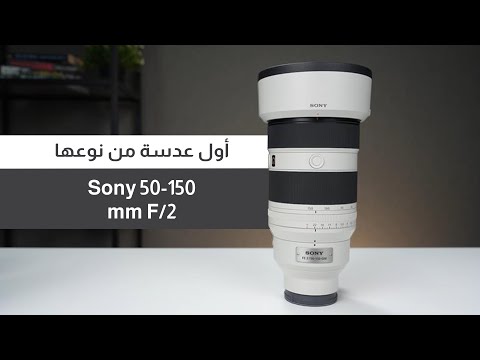
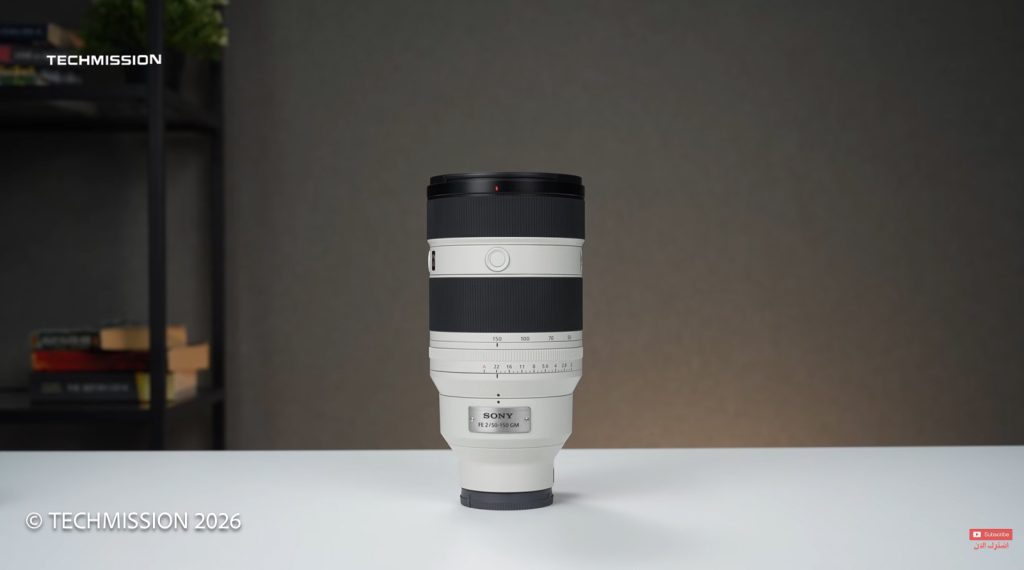
The Sony FE 50-150mm F2 GM occupies a focal range that previously did not exist in a professional constant F2 zoom.
The closest alternative is the Tamron 35-150mm F2-2.8, but the comparison only tells part of the story. While the Tamron starts wider, its aperture gradually narrows as you zoom. Sony maintains F2 throughout the entire zoom range, giving it a significant advantage in light transmission and subject separation.
That seemingly small one-stop advantage has meaningful practical implications.
At 50mm, F2 already delivers noticeably stronger background blur than F2.8. At 85mm, 135mm and especially 150mm, the combination of telephoto compression and a constant F2 aperture creates an image character that previously required multiple fast prime lenses.
For portrait specialists, wedding photographers and event shooters, this is arguably the lens’s greatest achievement.
Who Is It For?
This lens covers many of photography’s most popular portrait focal lengths:
- 50mm environmental portraits
- 85mm classic portraits
- 100mm and 135mm tighter compositions
- 150mm compressed portraits with exceptional background separation
It is equally attractive for:
- Wedding photography
- Corporate events
- Indoor sports
- Stage performances
- Documentary work
- Professional video production
Its versatility means many photographers could realistically replace several prime lenses with a single optic.
That convenience comes at a price—literally.
At approximately US$3,900, this is unquestionably a professional investment rather than an enthusiast purchase.

Design and Build Quality
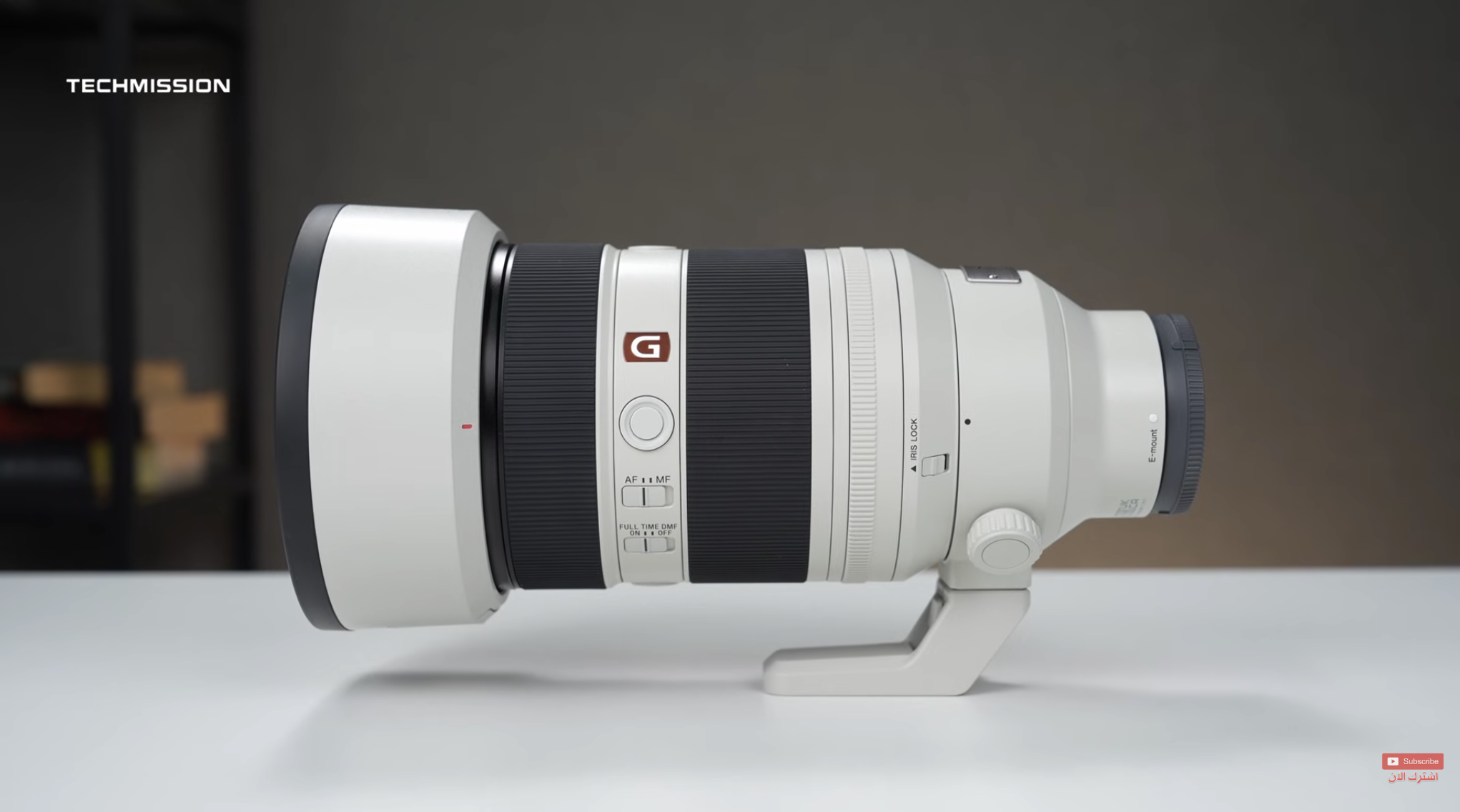
Sony built the FE 50-150mm F2 GM to the same professional standard expected from the G Master series.
Key specifications include:
- Internal zoom mechanism
- Length: approximately 200mm
- Diameter: 102.8mm
- Weight: approximately 1,340g without the tripod foot
- 95mm filter thread
- Comprehensive weather sealing
The internal zoom deserves particular praise. The lens never changes length while zooming, improving balance on tripods, monopods and gimbals while also reducing dust intake.
Although physically large, its size becomes easier to justify once you consider the optical complexity required to maintain a constant F2 aperture across this focal range.
Controls Designed for Professionals
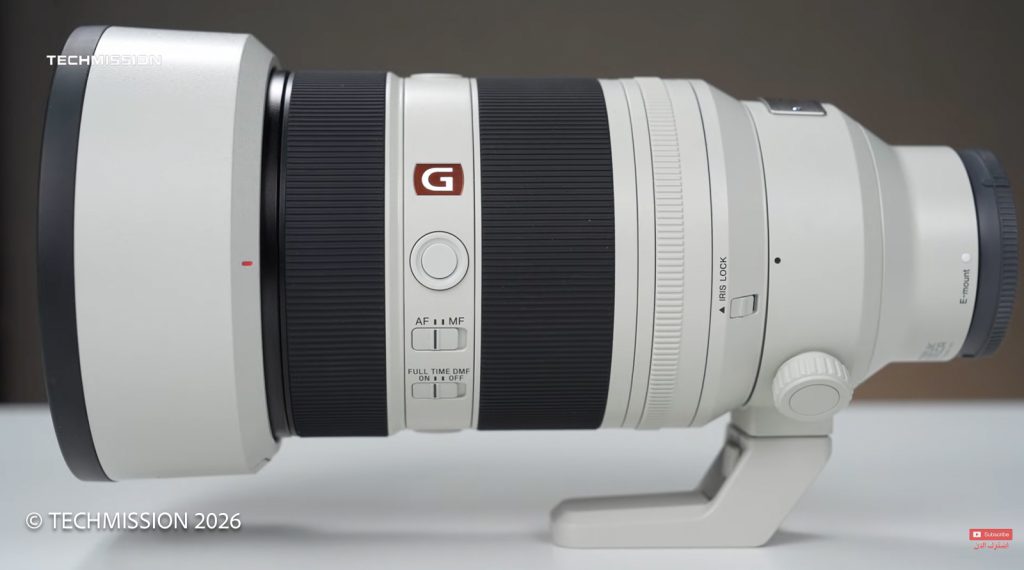
Sony has equipped the lens with an extensive professional control layout.
Highlights include:
- Three programmable focus hold buttons
- AF/MF switch
- Full-time Direct Manual Focus switch
- Dedicated aperture ring
- Click/de-click aperture control
- Iris lock switch
- Removable tripod collar
The aperture ring deserves special mention for video creators. The ability to remove aperture clicks allows completely smooth exposure transitions during recording.
One disappointment is the tripod foot itself.
Sony still does not provide native Arca-Swiss compatibility, meaning most professionals will need to attach an additional quick-release plate.
Another surprising omission is compatibility with Sony teleconverters. Given the lens’s optical quality, support for 1.4× and 2× teleconverters would have made it even more versatile.
Autofocus Performance
Autofocus is simply outstanding.
Sony employs four XD (Extreme Dynamic) Linear Motors, delivering exceptionally fast, silent and precise focusing.
In real-world use, autofocus proved consistently reliable for:
- Human eye detection
- Animal eye AF
- Bird photography
- Fast-moving subjects
- Continuous AF tracking
Focus transitions remain smooth and confident, making the lens equally suitable for demanding still photography and professional video production.
This is among the finest autofocus implementations currently available in Sony’s E-mount ecosystem.

Focus Breathing
Sony has clearly optimized this lens with filmmakers in mind.
Focus breathing is practically invisible throughout most of the zoom range.
At 50mm it is almost nonexistent, while at 150mm only a minimal amount can be observed.
Modern Sony cameras also offer Focus Breathing Compensation, reducing the effect even further with only a slight crop. In practice, however, most users may never feel the need to enable it.
Optical Performance
The FE 50-150mm F2 GM features an exceptionally sophisticated optical design consisting of:
- 19 elements in 17 groups
- 2 XA (Extreme Aspherical) elements
- 2 Aspherical elements
- 3 ED elements
- 2 Super ED elements
That complexity translates directly into image quality.

Sharpness
Wide open at F2, sharpness is already exceptional.
Across the zoom range:
- Outstanding center sharpness
- Excellent edge performance
- High microcontrast
- Minimal improvement needed when stopping down
Unlike many fast zoom lenses that become truly impressive only at F2.8 or F4, Sony delivers professional-level sharpness from maximum aperture.
This allows photographers to shoot confidently at F2 without hesitation.
Bokeh
With an 11-blade rounded diaphragm, the lens produces beautifully smooth background blur.
Combined with:
- Long focal lengths
- Constant F2 aperture
- Excellent optical correction
…the result is creamy, natural bokeh with pleasing circular highlights.
For portrait photographers, this is one of the strongest reasons to consider the lens.

Close Focusing
Minimum focusing distances are:
- 40cm at 50mm
- 74cm at 150mm
While respectable, the lens is not intended as a macro or close-up specialist.
Its magnification ratio is relatively modest, meaning photographers interested in product photography or macro work should still consider dedicated macro lenses.
Optical Flaws
No lens is entirely perfect, but Sony has kept compromises remarkably small.
Distortion
- Mild barrel distortion at 50mm
- Slight pincushion distortion at 150mm
Both are easily corrected in-camera or during RAW processing.
Vignetting
Very minimal, even at F2.
Chromatic Aberration
Essentially negligible in practical shooting.
Flare Resistance
The only area where I observed a minor weakness.
When shooting directly into strong light sources, contrast drops slightly. The effect is modest and well controlled, but it is one of the few imperfections I encountered during testing.
50-150mm F2 or 70-200mm F2.8?
This is the inevitable comparison.
Interestingly, my own choice would still be the 70-200mm F2.8 GM II.
The reason is simple.
I regularly photograph wildlife and sports, where the extra reach to 200mm matters more than the wider aperture.
However, if your work revolves around:
- Portrait photography
- Weddings
- Events
- Commercial people photography
- Video production
I would recommend the 50-150mm F2 GM over a traditional 70-200mm F2.8 without hesitation.
Its extra stop of light fundamentally changes what a zoom lens can deliver.

Buy It or Skip It?
Buy it if
- You are a professional portrait photographer.
- You regularly shoot weddings or events.
- You create commercial video content.
- You want prime-like image quality with zoom flexibility.
- You value outstanding autofocus and beautiful bokeh.
Skip it if
- You need the 200mm focal length for sports or wildlife.
- You frequently use teleconverters.
- You require macro capability.
- The US$3,900 price stretches your budget, as excellent alternatives such as a 70-200mm F2.8 or the Tamron 35-150mm F2-2.8 offer tremendous value for less.
TECHMISSION Recommends
Where to Buy the Sony FE 50-150mm F2 GM
Some links are affiliate links — TECHMISSION may earn a commission at no extra cost to you. See our affiliate disclosure.
Final Verdict
Sony has done something genuinely rare: it has created a lens that expands what photographers can reasonably expect from a professional zoom.
The FE 50-150mm F2 GM combines exceptional optics, class-leading autofocus, gorgeous bokeh and a focal range that naturally fits portrait, wedding and event photography. More importantly, it does so while maintaining a constant F2 aperture—something previously unavailable in this class.
It is expensive, large and unapologetically aimed at professionals. Yet for photographers whose work aligns with its strengths, it has the potential to replace an entire bag of prime lenses while sacrificing remarkably little in image quality.
That is perhaps the highest compliment a zoom lens can receive.