Thypoch Eureka 28mm f/2.8 Review: Classic Character Without the Optical Compromises
The Thypoch Eureka 28mm f/2.8 ASPH. is a compact, fully mechanical manual-focus lens for Leica M and Fujifilm X cameras, combining a beautifully executed vintage design with impressive sharpness, minimal distortion and a distinctive photographic character.
Lens reviews are among the most enjoyable reviews to make because every lens invites a different kind of photography. The Thypoch Eureka 28mm f/2.8 ASPH. is a perfect example: a compact manual-focus lens with the appearance and tactile character of a classic optic, but image quality that belongs comfortably in the modern era.
I tested the Fujifilm X-mount version. Its 28mm focal length delivers an angle of view equivalent to approximately 42mm on Fujifilm’s APS-C cameras, placing it neatly between the familiar 35mm and 50mm perspectives. That makes it a practical general-purpose lens for street photography, travel, everyday life, environmental portraits and even some landscapes.
The verdict is straightforward. The Eureka 28mm is beautifully built, optically excellent and full of personality. It is not for photographers who need autofocus, electronic communication or effortless video operation. But for Leica M or Fujifilm X users who enjoy slowing down and want a compact everyday lens with genuine character, it is easy to recommend.
Is the Thypoch Eureka 28mm completely manual?
Yes. The Eureka 28mm is a fully mechanical manual-focus lens. It has no autofocus motor, no electronic contacts and no communication with the camera body.
This means the camera does not receive lens information electronically. The selected aperture will not appear in the image’s EXIF metadata, so when you review a file later, you will not be able to confirm which f-stop was used from the metadata alone. Depending on the camera, you may also need to enable the option that allows shooting without an electronically recognised lens.
For some photographers, this will immediately rule the lens out. For others, it is precisely the appeal. Focusing, setting the aperture and deciding when to take the photograph all become deliberate physical actions. That slower process is part of the Eureka’s character rather than a missing feature that Thypoch is trying to hide.
Thypoch is still a relatively young Chinese lens manufacturer, but it has attracted considerable attention with its fast Simera manual-focus lenses. The Eureka series follows a different path. Instead of concentrating on a large f/1.4 aperture, it uses a more modest f/2.8 design to deliver a far smaller lens with a stronger connection to classic rangefinder photography.

How useful is 28mm on a Fujifilm X camera?
The Eureka 28mm was designed with a full-frame image circle and is available for Leica M and Fujifilm X cameras. On a Leica M body, it behaves as a true 28mm wide-angle lens. On Fujifilm’s APS-C format, the crop factor produces an angle of view similar to a 42mm lens on full frame.
That 42mm-equivalent perspective is unusually versatile. It is wider than a conventional 50mm standard lens, so it includes more of the environment and feels less restrictive in the street or indoors. At the same time, it is not as wide as a 35mm-equivalent lens, which makes it easier to isolate a person or detail without filling the frame with unnecessary background.
It works well for casual portraits rather than tightly framed portrait sessions, and it is an excellent focal length for daily life, travel and street photography. It can also handle landscapes when you want a natural view rather than an exaggerated wide-angle composition.
Using a full-frame optical design on an APS-C sensor brings another practical advantage: the Fujifilm camera records only the central portion of the lens’s image circle. Any potential weakness at the extreme full-frame edges falls outside the captured area, which helps explain the particularly clean corners and absence of visible vignetting in my X-mount results.

Does the brass construction feel as good as it looks?
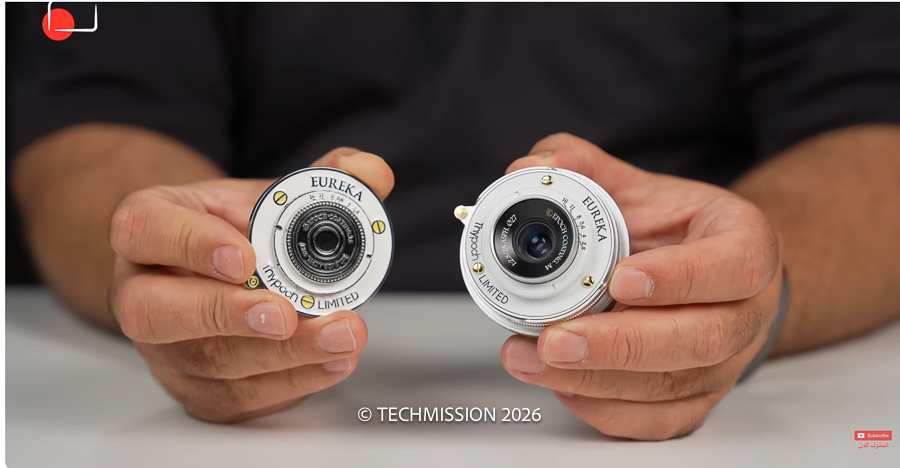
The first thing you notice is the quality of the construction. The Eureka 28mm is elegant, metallic and beautifully finished. Its brass body gives it a dense, substantial sensation in the hand. At approximately 137g it is not objectively a heavy lens, but the weight is concentrated into a very small body, making it feel reassuringly solid rather than hollow or inexpensive.
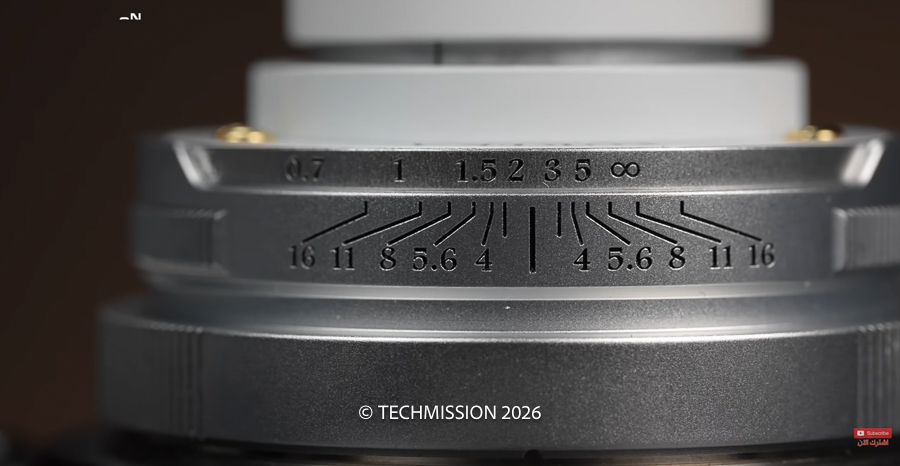
The styling is unmistakably classical. The engraved markings, sloping depth-of-field lines, decorative gold-toned screws and compact proportions recall lenses from the 1950s. Thypoch offers Matte Black and Pearl White finishes, and the result looks more like a carefully designed photographic instrument than another anonymous black cylinder.
Even the tiny hood contributes to the effect. It resembles a miniature dish and may be the most charming lens hood I have encountered. The supplied rear cap, by contrast, feels somewhat oversized relative to such a small lens, but that is a minor complaint.
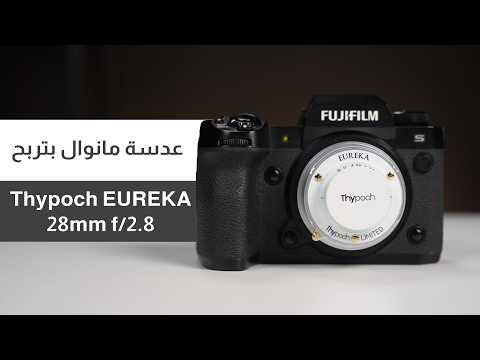
The lens looked slightly undersized on the relatively large Fujifilm X-H2S I used during the review. Visually, it may pair more naturally with a smaller body such as the X-S20 or X-T5. This makes no difference to its performance, but physical balance and appearance are part of the attraction when choosing a lens this design-led.
Are the aperture and focusing controls practical?
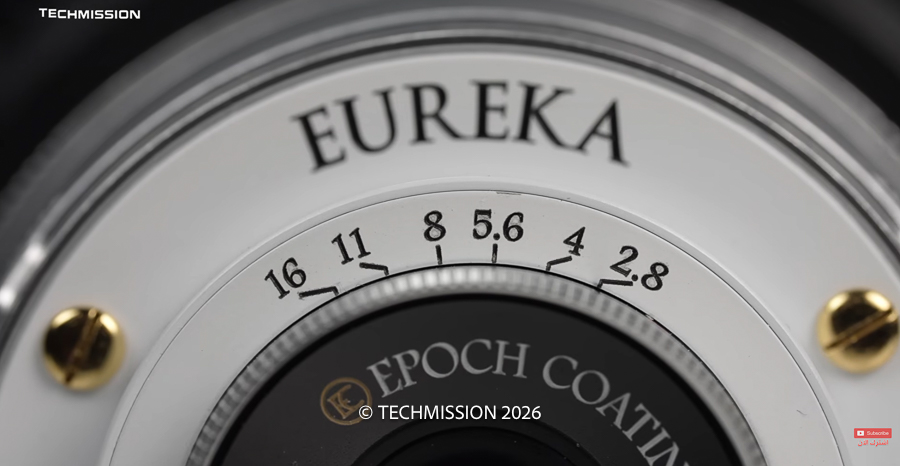
The aperture ring runs continuously from f/2.8 to f/16 without click stops. Because the lens is entirely mechanical, you can watch the eight-blade diaphragm open and close as the ring turns.
The clickless design allows smooth aperture changes, which can be useful for video, although the lack of marked detents makes it easier to move away from a selected aperture accidentally. I also found that the direction of operation felt reversed compared with the lenses I usually use: turning clockwise opens the aperture, while turning anticlockwise closes it. This is not a serious problem, but it may require a short period of adjustment.
Manual focusing is controlled mainly through a small focusing tab. The focus ring itself is difficult to turn comfortably without using that tab, so it becomes the natural point of contact. Beneath it is another ring that functions primarily as a grip.
The minimum focusing distance is 0.4m, unusually close for a compact M-mount-style 28mm lens. On full frame, that lets photographers move near a subject while preserving plenty of surrounding context. On Fujifilm X, the tighter effective angle of view makes close details and casual environmental portraits particularly useful.
How sharp is the Thypoch Eureka 28mm?
Image quality contains the most pleasant surprises. The Eureka 28mm produces excellent results even at its maximum f/2.8 aperture.
At f/2.8, central sharpness is excellent. The edges show a small reduction in contrast and a slight drop in sharpness, but they remain well resolved. From f/4 onward, performance becomes excellent across the image.
For the types of photography this lens suits best—street scenes, travel and landscapes—I would often work between f/5.6 and f/11. In that range, sharpness and contrast are excellent from edge to edge, with no meaningful optical weakness to distract from the image.
There is an important qualification: the lens can only deliver this sharpness if the photographer focuses accurately. With no autofocus assistance from the lens, a missed focus is a focusing error, not a sharpness problem. Fujifilm’s magnified view and focus-peaking tools make the process easier, but the responsibility remains with the photographer.
I deliberately avoided judging the lens through the demands of Fujifilm’s highest-resolution sensors. My experience was based on a lower-resolution body that suits the manual-focus workflow well. The results were consistently strong in that context, but photographers considering it for a particularly demanding high-resolution camera should keep that distinction in mind.
How well does it control vignetting and distortion?
On the Fujifilm X camera used for this review, I found no meaningful vignetting. As noted earlier, the APS-C sensor uses the central part of a larger full-frame image circle, so the areas most likely to darken at the corners are cropped away.
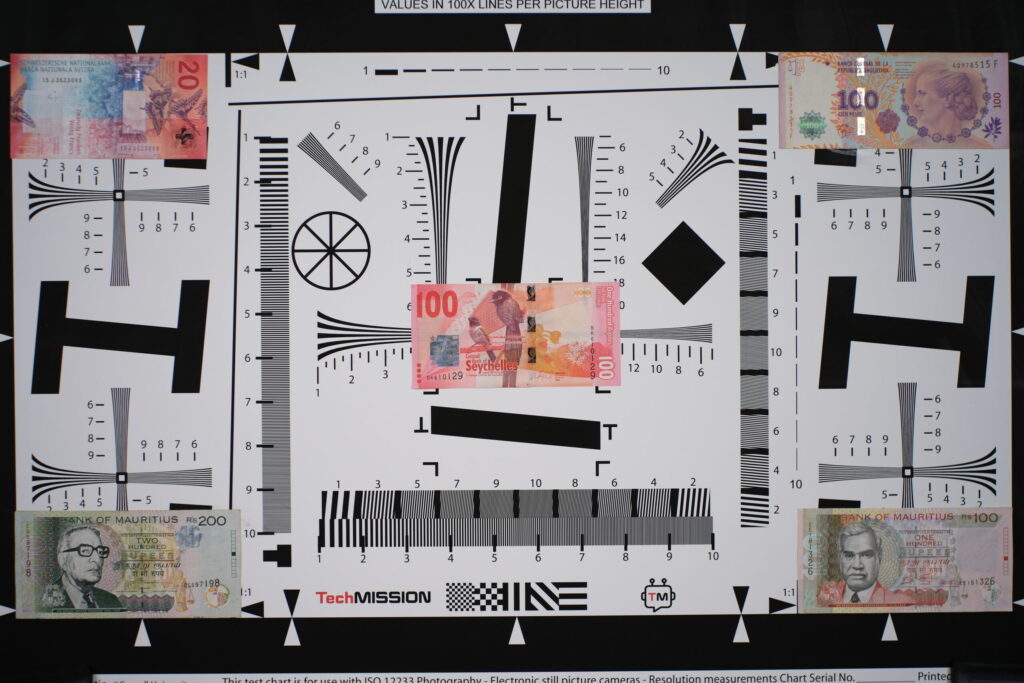
Distortion control is even more impressive. I found no visible barrel distortion and no pincushion distortion. Straight lines remained convincingly straight in both test-chart images and real-world photographs.
That is a valuable quality for street scenes, architecture and travel photography, where curved building edges and bent horizons can become immediately distracting. It is particularly notable in such a compact 28mm optical design.
Chromatic aberration was similarly difficult to find. I examined high-contrast edges closely and saw no colour fringing significant enough to mention as a practical weakness. Thypoch deserves considerable credit for controlling distortion and chromatic aberration this well while keeping the lens so small.
The optical formula uses seven elements in four groups, including an aspherical element and high-refractive-index glass. Thypoch also applies its Epoch Coating M. multi-layer coating to control flare and maintain a clean, modern result. Specifications alone do not guarantee good images, but in this case the real-world performance supports the engineering claims.
Is the Eureka 28mm suitable for video?
This is primarily a still-photography lens. A fully manual lens can certainly be used for video—cinema lenses are manual for good reasons—but it requires a deliberate way of working.
If you set focus in advance and use a smaller aperture such as f/8 for a street scene, the lens can produce excellent video. Cars, pedestrians and daily activity can move through a sufficiently deep zone of focus without causing difficulty. The clickless aperture ring is also useful when exposure needs to change smoothly during a shot.
The main video limitation is focus breathing. The angle of view changes visibly as focus moves, so a focus pull can make the frame appear to pulse or breathe. This will be distracting in shots where the focus point shifts during recording.
For locked-focus compositions, travel details, street scenes and controlled manual work, video quality can be excellent. For continuous handheld focusing or repeated focus transitions, there are more suitable lenses.
Where does the Eureka’s “classic character” appear?
The Eureka 28mm is not interesting merely because it looks old. Its personality is visible in the photographs.
There is a recognisable character to the rendering—a sense of the classic lenses many photographers remember fondly—without the soft corners, heavy colour fringing or obvious distortion that often accompany genuinely old optics. In-focus areas are clean and detailed, while transitions have a natural quality that prevents the images from feeling sterile.
I would not compare a young manufacturer directly with a historic name such as Zeiss, whose optical heritage extends across more than a century. But Thypoch is clearly attempting something more ambitious than producing another technically competent manual lens. The Eureka has a distinct visual and physical identity, and it does not try to hide that personality.
This is likely to be the deciding factor for many buyers. There are practical reasons to choose the lens—compact dimensions, a useful focal length, strong sharpness and excellent correction—but its character is what makes someone want to take it out and photograph daily life.

Key Thypoch Eureka 28mm f/2.8 specifications
| Specification | Details |
|---|---|
| Focal length | 28mm |
| Maximum aperture | f/2.8 |
| Minimum aperture | f/16 |
| Format | Full-frame image circle |
| Available mounts | Leica M and Fujifilm X |
| Fujifilm X equivalent | Approximately 42mm |
| Focusing | Fully manual |
| Electronic contacts | None |
| Optical construction | 7 elements in 4 groups |
| Special elements | 1 aspherical element and high-refractive-index elements |
| Aperture blades | 8 |
| Minimum focusing distance | 0.4m |
| Angle of view on full frame | 75° diagonal, 65° horizontal, 46° vertical |
| Filter size | M27 |
| Length | 19.5mm at infinity; up to 21.9mm at 0.4m |
| Weight | Approximately 137g |
| Finishes | Matte Black and Pearl White |
Who should buy the Thypoch Eureka 28mm?
The Eureka 28mm is best suited to photographers who value the process of making a photograph as much as technical convenience. It is an excellent travel and everyday lens for Leica M users who want a genuinely compact 28mm, and for Fujifilm X photographers attracted to a natural 42mm-equivalent field of view.
It is also a strong choice for street photographers who prefer zone focusing, photographers who enjoy tactile manual controls, and anyone looking for a lens with a recognisable signature rather than clinically anonymous rendering.
It is not the right choice if autofocus is essential, if you rely on aperture data in EXIF, or if you regularly record video with active focus pulls. Buyers using Fujifilm’s highest-resolution cameras may also want to evaluate whether a fully manual lens suits the precision their workflow demands.
At the time of writing, the official price is approximately $459. That is very competitive for a compact brass lens with this level of optical performance and finish, although the final decision should still be based on whether its fully manual operation fits the way you photograph.
Thypoch Eureka 28mm f/2.8 verdict
The Thypoch Eureka 28mm f/2.8 succeeds because its beauty is supported by substance. The brass construction, engraved details and unusual finishes give it the atmosphere of a classic lens, but the images do not depend on nostalgia. Sharpness is excellent, distortion and chromatic aberration are remarkably well controlled, and the compact size makes it an easy lens to carry.
Its limitations are inseparable from its identity. There is no autofocus, no electronic communication and no recorded aperture data. The clickless aperture ring operates in an initially unfamiliar direction, focusing depends heavily on the small tab, and visible focus breathing limits some video work.
None of those points changes the central recommendation. If you shoot Leica M or Fujifilm X, want a practical lens for travel and everyday photography, and value a distinctive rendering style, the Eureka 28mm f/2.8 is an excellent choice.
It recalls the pleasure of classic lenses without asking you to accept classic optical faults. For less than $500, that combination of personality, portability and performance is genuinely compelling.