
Huawei Pura 90s Pro Max Review: A Camera Disguised as a Smartphone
Huawei’s latest flagship does more than add another high-resolution camera to a phone. With a huge 200MP telephoto sensor, 4x optical zoom and remarkably capable long-range photography, the Pura 90s Pro Max attempts to rethink what a mobile camera can be.
Is this a camera called the Huawei Pura 90s Pro Max, or a smartphone trying very hard to behave like one?
When a manufacturer announces a 200MP camera, we normally expect to find it behind the main lens. And when a phone promises serious telephoto performance, manufacturers usually choose a relatively small sensor because it is easier to fit behind a long periscope lens.
Huawei has done neither.
Instead, it has placed a large 1/1.28-inch, 200MP sensor behind the most technically demanding camera in the phone: the telephoto. It delivers approximately 4x optical zoom, highly detailed crops at 8x and usable results at considerably longer distances. It can even photograph tiny subjects from a distance through telephoto macro.
That decision summarises the philosophy behind the Pura 90s Pro Max. This is not simply a phone with a different-looking camera module. Its imaging hardware is genuinely unusual—and unusually bold.
The question is whether that 200MP telephoto camera changes how we photograph, or whether its intimidating numbers are mainly there to sell the phone.
A camera review, not a conventional phone review
This is not going to be a traditional smartphone review. We will briefly cover the specifications, but the Pura 90s Pro Max deserves to be examined primarily as a camera—or, more accurately, as three cameras contained inside a smartphone body.
The focus is on how it photographs near and distant subjects, how it responds to difficult light and how artificial intelligence participates in the process before and after the shutter is pressed.
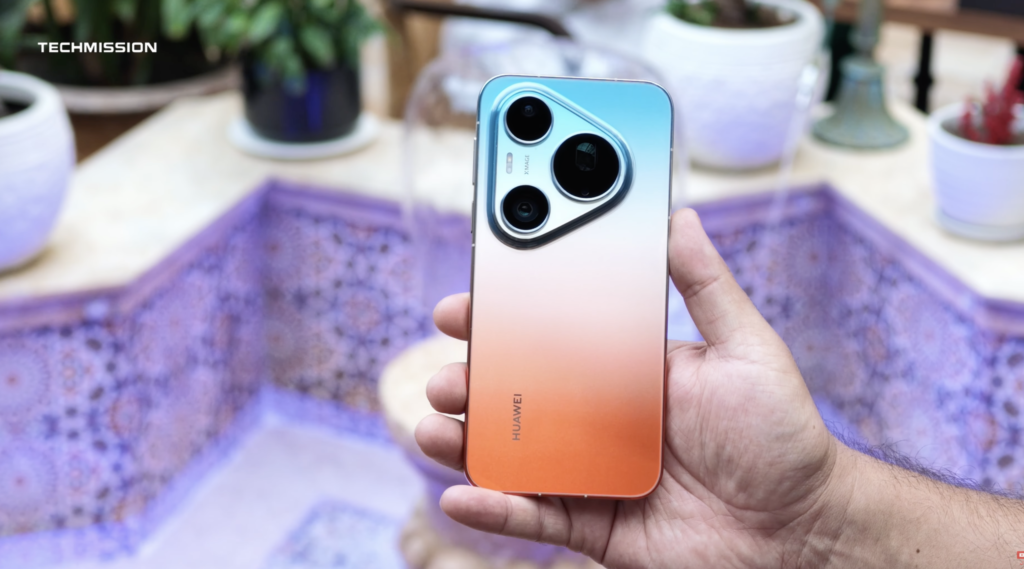
We should still talk about the design, because Huawei has made another bold choice here. You may love it, as I do, or find it excessive, but you cannot call it ordinary. The Pura 90s Pro Max has a visual identity that is immediately recognisable.
That strong personality comes at a price. This is a large device with a 6.9-inch display, a thickness of 8.1mm and a weight of approximately 230.5g. It is neither small nor light, and it makes no attempt to hide its presence.
The flat sides are comfortable when using it as a camera, giving the hands a more secure surface to hold. Its large display also provides a generous viewfinder for composing images and reviewing details.
The remaining flagship specifications include a 1–120Hz LTPO OLED display, the Kirin 9030S processor, 12GB of RAM and 256GB or 512GB of storage, depending on the market. The battery reaches 6,000mAh outside the EU, while maximum wired charging is rated at 100W. IP68 and IP69 ratings provide additional protection against water and dust under controlled conditions. Full regional details are available in Huawei’s official specifications.
These features matter to photographers. A large battery lets you spend longer shooting and editing, while the expansive display makes framing and evaluating images easier. High-resolution photography, HDR video, long zoom and AI editing all consume power, so the supporting hardware is more than a collection of numbers.
Three cameras, with one obvious superstar
The Pura 90s Pro Max has three rear cameras, supported by Huawei’s True-to-Colour Camera 2.0 system.
The 50MP main camera uses a large RYYB sensor, optical image stabilisation and a real variable aperture ranging from f/1.4 to f/4.0. Unlike a software simulation, this aperture changes physically across ten steps, allowing the camera to regulate incoming light and control depth of field more naturally.
Its performance is excellent in good light and remains impressive as illumination falls. Images show attractive sharpness, balanced contrast and strong highlight control. In challenging scenes, Huawei’s HDR system helps retain information that could otherwise disappear into bright highlights or deep shadows.
The 40MP f/2.2 ultrawide camera also produces excellent images, with a dramatic perspective and consistent colour. It was the camera I used least, but that was not because it performed badly. The telephoto camera was simply so enjoyable that it kept stealing my attention.
And that brings us to the star of the system.
The telephoto combines a 200MP RYYB sensor with an f/2.6 periscope lens, optical stabilisation and an approximately 89mm-equivalent focal length. That gives it roughly 4x optical zoom relative to the 24mm main camera.
A large sensor of this kind is already unusual in a smartphone telephoto. Giving it 200 million pixels makes Huawei’s decision even more ambitious.

Why this telephoto camera is an engineering challenge
Fitting a powerful telephoto camera inside a thin smartphone is difficult. To achieve a narrower field of view with a larger sensor, the optical system needs a longer effective focal length. That requires more space—something smartphones have very little of.
Manufacturers often use smaller telephoto sensors partly because they allow a narrow field of view to be achieved with shorter physical optics. Huawei has taken the more difficult route by using a sensor comparable in size to the main camera sensor.
Resolution introduces another challenge. A dense 200MP sensor places considerable demands on the lens, stabilisation and image-processing system. Small movements, optical weaknesses and poor light become more visible as the camera attempts to resolve finer detail.
In other words, Huawei is trying to solve the three problems that commonly weaken smartphone telephoto images: light, detail and stability.
The result is not merely a zoom camera included to complete the specification sheet. It is a camera that actively makes me want to use the telephoto perspective.
The difference is not just magnification
At 4x, the Pura 90s Pro Max delivers the perspective expected from a proper short telephoto lens. When you step back to frame the subject, backgrounds appear more compressed, facial proportions become more flattering and compositions acquire a very different character from images captured with the main camera.
The 8x setting is particularly enjoyable. It is a digital crop rather than a second optical focal length, but the 200MP sensor gives the system enough information to retain impressive detail. In favourable conditions, it feels much closer to a dedicated focal length than conventional digital zoom.
Even 20x can produce attractive and genuinely useful results when the light and shooting technique cooperate. It is not magic, and it should not be treated as optical zoom, but it extends the photographer’s reach far beyond what most phone cameras can achieve convincingly.
The important point is that I did not use the telephoto once or twice for novelty shots and then forget about it. I kept returning to it. It changes how you look at a scene, encouraging you to isolate distant subjects, search for layers and create compositions that would not work with a wide lens.

Telephoto macro: getting close without approaching
The telephoto camera has another fascinating ability: close-up photography from a distance.
Traditional macro photography usually requires bringing the camera extremely close to the subject. That may work for flowers or stationary objects, but it becomes a problem when photographing insects and other subjects that are likely to move or fly away.
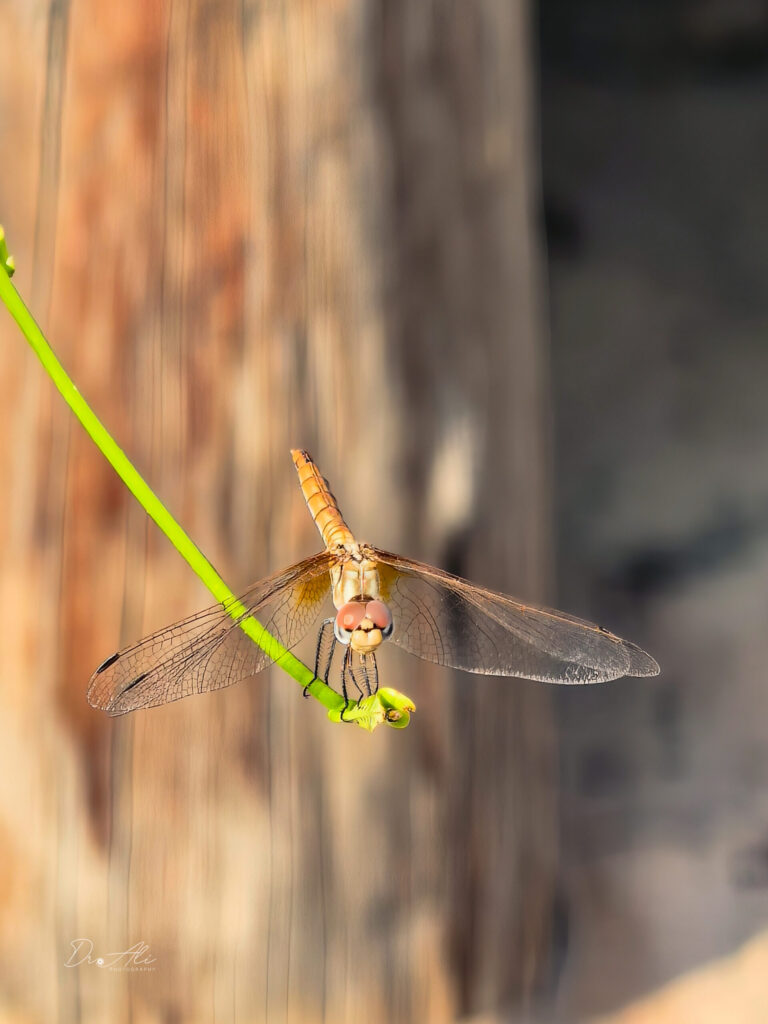
Telephoto macro provides close-up framing while allowing the photographer to remain farther back. That made it possible to photograph subjects such as dragonflies without pushing the phone directly towards them.
This is one of the Pura 90s Pro Max’s most creatively useful features. It is not simply about making something appear larger. It gives the photographer access to images that might otherwise be impossible to capture with a phone.
Long-range video requires discipline
Huawei also supports telephoto video at up to 20x, while the rear camera system can record at up to 4K resolution.
Consider what this can offer at a concert. Instead of recording the familiar wide shot filled with raised hands and other smartphones, you can isolate the performer onstage and produce a much more focused composition.
However, video is less forgiving than photography. A still image can be cropped, straightened and carefully corrected afterwards. During a long-zoom video, every small shake and sudden movement becomes visible.
At 20x, hold the phone as steadily as possible. Avoid fast panning and do not attempt unnecessary camera movements. Optical stabilisation helps, but it cannot completely defeat the physics of such a narrow field of view. A tripod or stable support can transform the results.
True-to-Colour Camera 2.0
The additional True-to-Colour Camera 2.0 is not present simply so Huawei can advertise another camera. Its purpose is to analyse colour and help the imaging system maintain natural skin tones, accurate white balance and believable environmental colours under difficult lighting.
The contribution may be less obvious than a dramatic zoom demonstration, but it affects every photograph. The Pura 90s Pro Max generally produces convincing colours without forcing every scene into an exaggerated or artificial style.
That consistency is particularly important when moving between the main, ultrawide and telephoto cameras. A multi-camera phone should feel like one coherent imaging system, not three unrelated cameras with completely different interpretations of colour.

AI before and after the photograph
Artificial intelligence is now inseparable from smartphone photography, and Huawei uses it on both sides of the shutter press.
Before capturing an image, AI Composition can display visual guidance to help the photographer find a stronger angle or arrangement. Experienced photographers may prefer to work without it, but it can be useful for anyone still learning how to build a composition.
After the photograph is taken, AI De-glare can reduce reflections from glass and other shiny surfaces. It cannot reconstruct detail that was never captured, but it can noticeably improve difficult images.
AI Remove deletes unwanted objects, while AI Move can reposition an element and attempt to recreate both its surroundings and its shadow. Best Expression helps select a better facial expression from a sequence of images. Feature availability can differ by country and software version, as Huawei notes on its official product page.
These tools are powerful, but they should complement photographic skill rather than replace it. Learn composition, light and timing first. Capture the strongest possible image in the traditional way, then use AI to refine it.

The verdict
The Huawei Pura 90s Pro Max achieves something rare: it makes a smartphone telephoto camera feel like a genuine creative tool rather than an additional lens included for occasional use.
Its 200MP telephoto camera is technically ambitious, but its value is not found in the number alone. What matters is the combination of sensor size, optics, stabilisation, image processing and the perspectives it makes possible.
The main camera is excellent, the ultrawide is highly capable and the colour system helps bind everything together. But the telephoto is what gives this phone its identity. Its 4x perspective, detailed 8x images, usable long-range results and telephoto macro capabilities made me want to keep taking photographs.
That is ultimately the most meaningful compliment I can give any camera.
Friends have asked to borrow the Pura 90s Pro Max for trips—not to use it as a phone, but simply to carry it as a camera, sometimes without even installing a SIM card.
That tells you almost everything you need to know about it.