Viltrox 14mm F4 Air Review: Tiny Lens, Excellent Travel Results
A pocket-sized ultra-wide that delivered excellent travel images in Spain, with a few optical compromises worth understanding.
The Viltrox AF 14mm F4 Air is an easy lens to recommend if you want an ultra-wide view without the size and expense of a premium zoom. I tested the Nikon Z version during a trip to Spain, including Granada and the Alhambra, and came back impressed by both the images and how enjoyable it was to carry. Strong sharpness, especially at f/8, makes it a practical option for architecture, interiors and landscapes. Flare resistance and noticeable vignetting at f/4 are the main qualifications.
Why 14mm earns a place in a travel bag
At 14mm, you can fit an expansive interior or an architectural scene into the frame when there is little room to step back. It is a useful perspective for real estate, landscapes and video shots that need a strong sense of space. That kind of coverage often comes in a large, expensive lens, which makes the compact Air unusually appealing.
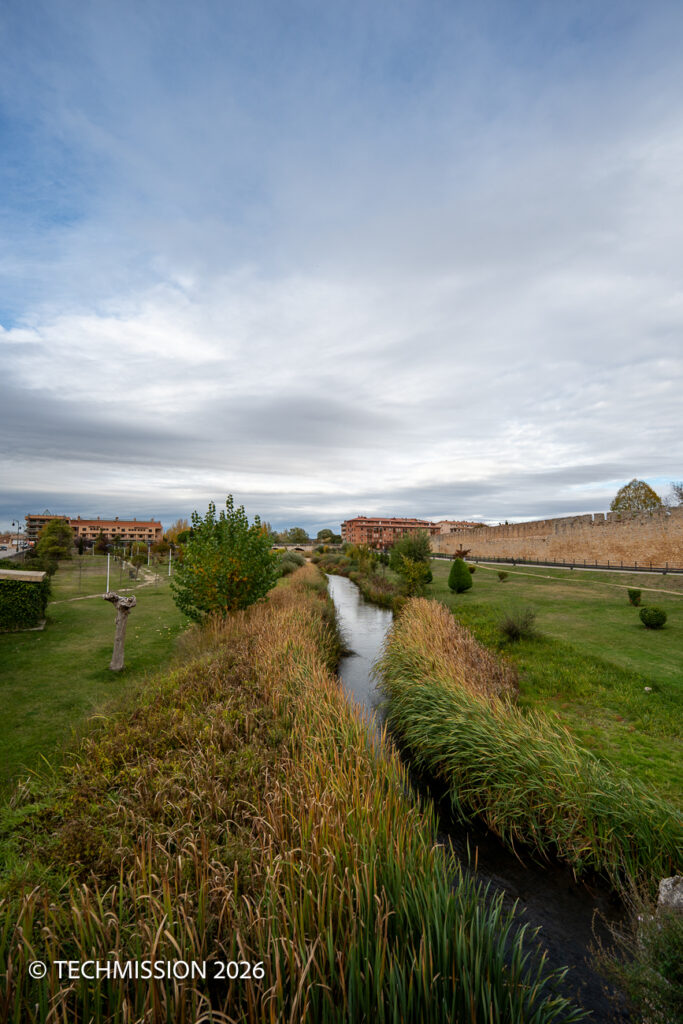
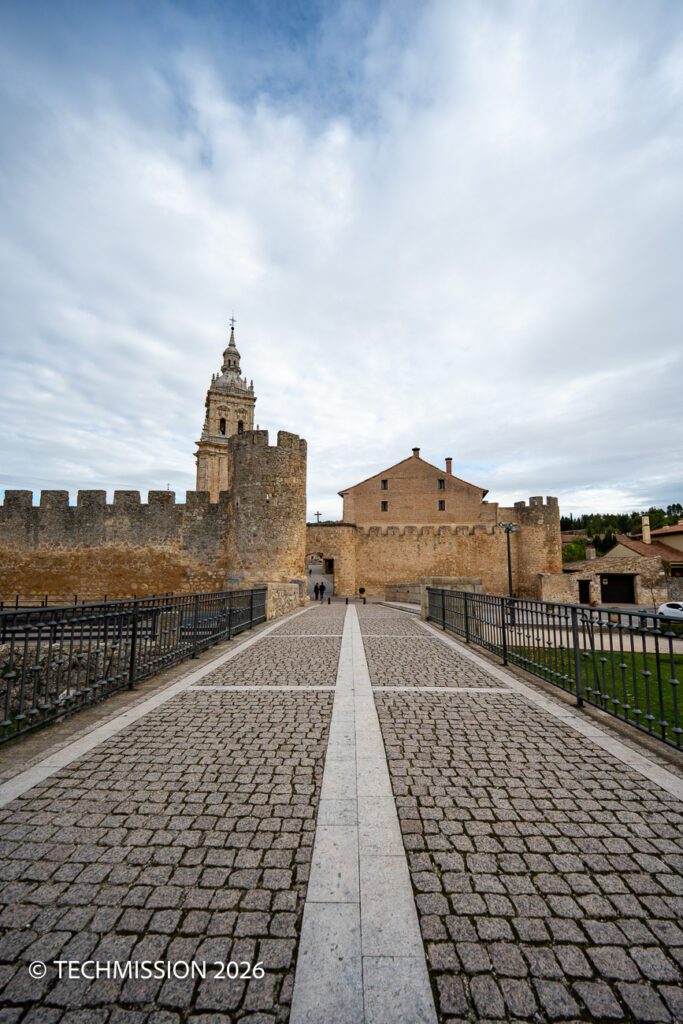
In Spain, I had a Nikon ultra-wide zoom with me as well, yet repeatedly reached for the Viltrox when leaving the car and heading out on foot. At the Alhambra, including the Court of the Lions, it gave me the wide perspective I wanted without making the camera tiring to carry. The attraction was not just saving weight in the bag; it was having a lens I actually wanted to keep using.
Small construction, with practical front filters
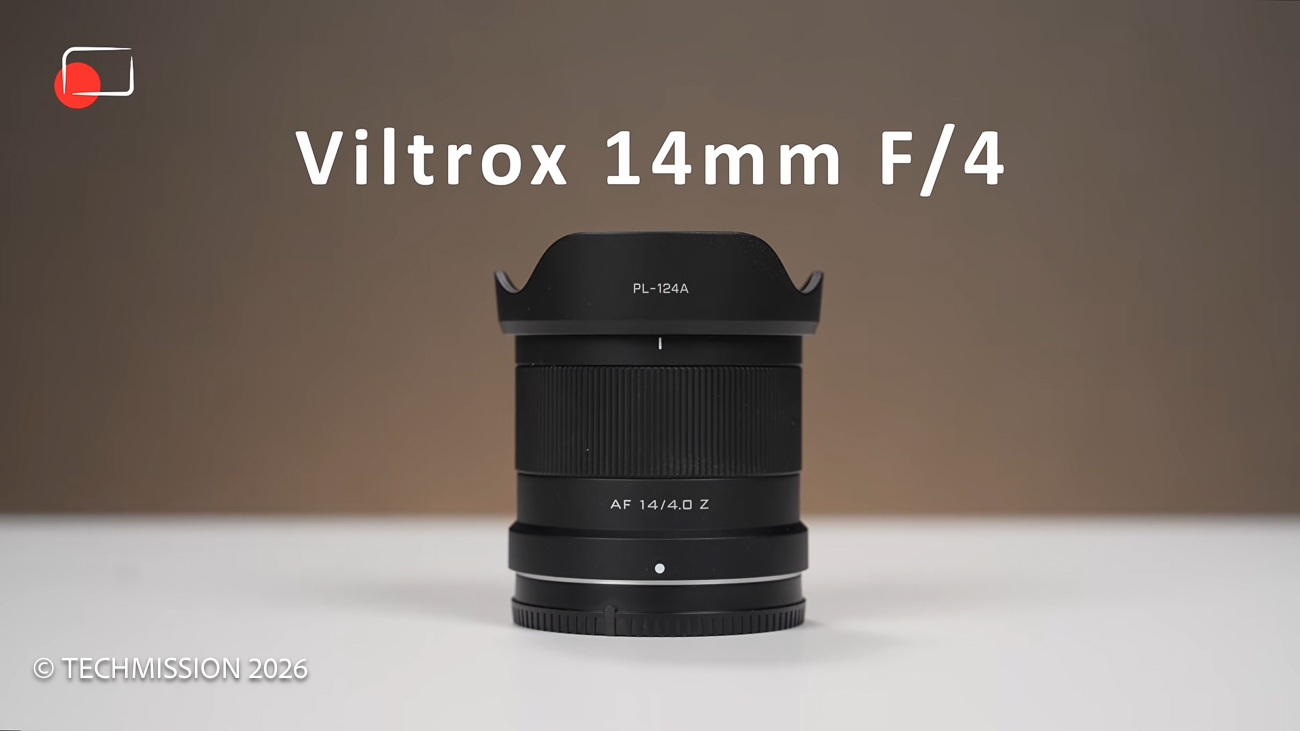
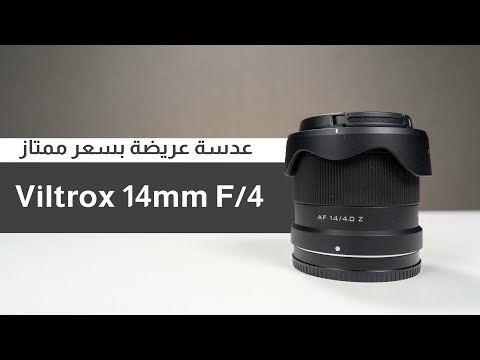
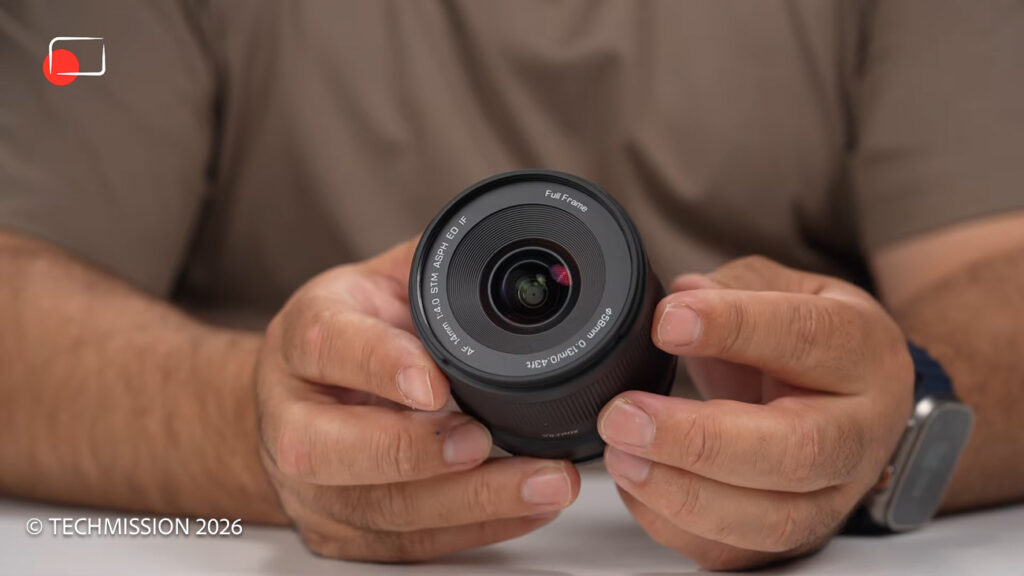
The exterior is simple, with a plastic barrel that felt neat and sturdy in use, a metal mount and a single ring. On Sony E, that ring handles manual focus. On compatible Nikon Z bodies, it can also be assigned to functions such as aperture control. A USB-C port in the mount allows firmware updates. There is no weather sealing, so this is a lens to protect carefully in poor conditions.
The front element is not excessively bulbous, allowing a conventional 58mm filter thread. That is useful on a 14mm lens, but filter thickness matters: a thick filter rim can intrude into this very wide view and cause mechanical vignetting. If you plan to use an ND filter for video, check the corners with your actual filter setup before a shoot.
The key specifications for Sony E and Nikon Z
| Specification | Sony E | Nikon Z |
|---|---|---|
| Coverage / focal length | Full frame / 14mm | Full frame / 14mm |
| Aperture range | f/4–f/16 | f/4–f/16 |
| Optical construction | 12 elements in 9 groups | 12 elements in 9 groups |
| Minimum focus / max. magnification | 0.13m / 0.23× | 0.13m / 0.23× |
| Filter thread | 58mm | 58mm |
| Dimensions (diameter × length) | 65 × 56.4mm | 68 × 58.4mm |
| Weight (bare lens) | Approx. 170g | Approx. 185g |
| Aperture blades / AF motor | 7 / STM | 7 / STM |
The review discusses this as an approximately US$200 lens. Viltrox lists the Sony E and Nikon Z versions at US$199 at the time of preparing this article; local prices and availability can differ. The hands-on findings here come from the Nikon Z sample. Both versions share the core optical specifications, although I did not separately test the Sony version.
Autofocus that handled the job comfortably
The STM autofocus worked very well for the subjects I photographed. When I asked it to focus on a subject, it responded reliably. That experience needs context, though: much of my shooting was at f/8, where a 14mm lens provides considerable depth of field. This is not a demanding test of fast subject tracking or shallow-depth-of-field focus accuracy.
The 13cm minimum focus distance and 0.23× maximum magnification also allow exaggerated close foregrounds. Those figures add flexibility, even though architecture and landscapes were the more important uses for me.
Sharpness is the pleasant surprise
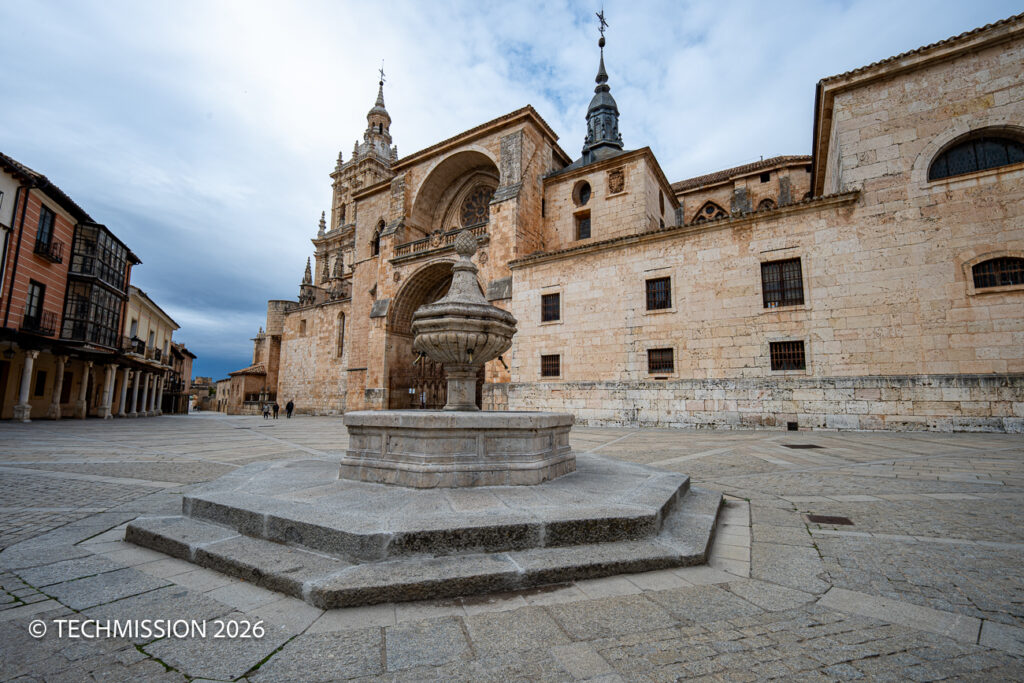
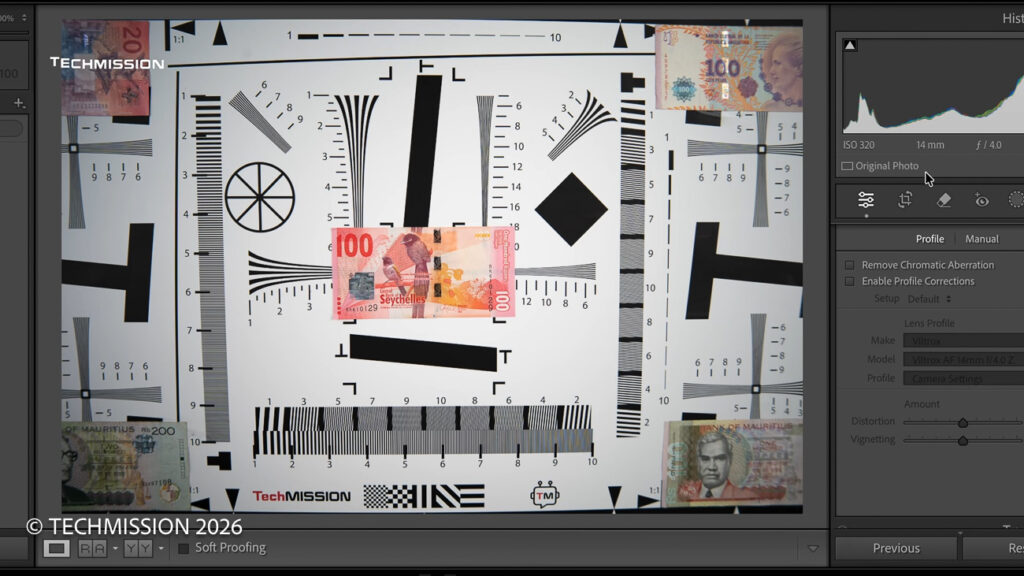
At f/4, centre sharpness and contrast were excellent, with strong performance through the middle of the frame. The edges showed a small reduction in both sharpness and contrast. At f/5.6, the same general pattern remained: an excellent centre and mid-frame, with some softness toward the edges.
At f/8, performance became excellent across the frame, and the remaining edge reduction was very small. That matters because f/8 is where I often want to work for this sort of architecture and landscape photography. The useful result is a lightweight lens that delivers convincing detail at a practical working aperture.
Chromatic aberration was well controlled in both the Spain photographs and the studio charts. There could be a small amount of lateral colour fringing, but it was not a significant concern in my images.
Watch the corners—and bright light in the frame
Vignetting is clearly visible at f/4. It improves at f/5.6 and improves further at f/8. Applying the lens profile in Lightroom helped correct it in my workflow. This optical corner shading is separate from the mechanical shading that an unsuitable filter can introduce.
The charts also showed a small amount of barrel distortion with an irregular shape, which can make manual correction less straightforward. It did not create a major problem in my travel images. If your work depends on precisely straight architectural lines, it is still something to inspect rather than assume away.
Flare is the more obvious weakness. Bright light sources can produce visible ghosts and other artefacts, and these can appear even without pointing directly into the sun. Some examples looked attractive to me, but they remain an optical limitation. When the sun or another strong light is near the frame, pay attention to your angle and inspect the result.
The seven-blade diaphragm can produce attractive sunstars. That creative option comes with the same caution: the lighting that produces a sunstar can also expose the lens’s weaker flare resistance.
Who should buy the Viltrox 14mm F4 Air?
This makes particular sense for photographers who want an affordable ultra-wide for travel, interiors, real estate or landscapes, especially if they usually stop down. It is also an easy second lens to bring when 14mm is useful only occasionally. For video, the wide perspective and low weight are attractive, although filter clearance deserves attention.
The f/4 maximum aperture, lack of weather sealing and flare behaviour are the trade-offs. A premium ultra-wide zoom still offers focal-length flexibility, and a faster lens serves different low-light needs. The Air’s appeal is the combination of useful image quality, low cost and unusually easy handling.
Sony E-mount
TECHMISSION Recommends
Where to Buy the Viltrox 14mm F4 Air for Sony E-Mount
Some links are affiliate links — TECHMISSION may earn a commission at no extra cost to you. See our affiliate disclosure.
Nikon Z-mount
TECHMISSION Recommends
Where to Buy the Viltrox 14mm F4 Air for Nikon Z Mount
Some links are affiliate links — TECHMISSION may earn a commission at no extra cost to you. See our affiliate disclosure.
Verdict: a tiny lens I kept reaching for
The Viltrox AF 14mm F4 Air was a pleasure to use in Spain and after returning home. It is small enough to slip into a pocket, light enough to carry without thinking, and capable of excellent results at f/8. You need to understand its flare and vignetting, but those compromises did not outweigh its usefulness for me. If you want a compact 14mm prime for Sony E or Nikon Z, it is a compelling option.